Awakening Cooperative Lab · Projects · Seminar
KASpaces National Seminar — Decoding the DNA of Taiwan Education: Where Do We See Progress and Equality?
Part of the case study: Education seminar and workshop with the Konrad Adenauer Foundation
Taiwan’s national seminar in the KASpaces programme of the Konrad-Adenauer-Stiftung: four sessions, eight issues, each put as a “How might we…?” question, shown through one case and reported from two viewpoints, then taken into discussion rooms with the participants.
- Date
- 23–24 October 2021, 12:30–18:30 (GMT+8)
- Place
- Online (Zoom)
- Commissioned by
- Konrad-Adenauer-Stiftung (KAS)
- Co-organised by
- ZA Share and D School at National Taiwan University
- Implemented by
- Awakening Cooperative Lab
- Co-chaired by
- Shenglin Elijah Chang 張聖琳 and Adler Yang
- Supported by
- Only實驗教育; THE ONE校長學校; 人文實驗中小學; 台北市北投社區大學; 台北市和平實驗小學; 台灣另類暨實驗教育學會; 社團法人台灣家長教育聯盟; 社團法人全國社區大學促進會; 保障教育選擇權聯盟; 教育部十二年國教新課綱推動專案辦公室; 種籽親子小學
- Sponsored by
- UniHub, X University
About this event
For the first time, Germany is inviting Taiwanese education onto the international stage.
You may be wondering: Taiwan’s education system is so poor—what could other countries possibly learn from it?
But what you may not know is...
Taiwan has open-education policies and legislation that are the envy even of Summerhill School, a pioneer of alternative education;
regulations requiring students to participate in the review of curriculum guidelines;
and, beyond the central education and research authorities, the country’s highest-level agency responsible for national development is also making every effort to promote cross-sector collaboration in educational innovation...
...and there is much more in Taiwan’s educational ‘DNA’ that stands proudly alongside international practice, waiting for you to discover, propose and help bring to wider attention!
In response to COVID-19’s impact on education, and to learn from the experiences of different countries, the Konrad-Adenauer-Stiftung (KAS), a think tank affiliated with Germany’s former governing party, launched the KASpaces (Konrad Adenauer Sharing Political and Civic Engagements Spaces) initiative this year. By commissioning local organisations in each country to prepare research reports and hold seminars, the initiative is gathering grassroots educational ‘best practices’ from thirteen Asian countries, including Japan, South Korea, India, Nepal and the Philippines.
In twelve of these thirteen countries, the participating local organisations have worked with the Konrad-Adenauer-Stiftung for many years. Taiwan alone was invited to participate for the first time this year.
Through a fortuitous turn of events, the NTU D-School (National Taiwan University) and ZA Share were called upon at short notice. They quickly enlisted the Awakening Cooperative Lab, which has long been involved in and closely acquainted with educational innovation and reform in Taiwan and abroad. Together, they took on this weighty responsibility—one too great for government alone—accepting the challenge of organising a seminar in under two months, submitting a research report in under three months, and sending representatives to an Asia regional forum to share Taiwan’s experience!
To show the world the power of grassroots educational reform in Taiwan, we need your participation.
Whether you have a question you would like to raise for discussion or an insight you would like to share—your participation will help ‘write’ history.
This online seminar aims to produce two major outcomes:
First, the seminar proceedings will be documented and compiled into a report, which will be submitted to the Konrad-Adenauer-Stiftung in Germany and Taiwan’s National Academy for Educational Research as a reference for policymaking.
Second, every presenter at this seminar comes with concrete needs arising from innovative change on the front lines of Taiwanese education. Through your participation, we hope to develop reform proposals and action plans together, and even build a mutually supportive learning community for the journey of change.
In pursuing these two outcomes, we share a common aspiration: through this seminar, we aim not only to present the fairness and progress of Taiwanese education to an international audience with confidence and humility, but also to examine its current problems and challenges with openness and objectivity. By participating in this public forum, you can help make what is already good in Taiwanese education even better, and enable it to reach still greater heights.
The seminar comprises four sessions, presenting four major dimensions and eight key issues in Taiwanese education:
Each issue is framed as a forward-looking ‘How might we...?’ question and grounded in the present through a case study. Every issue is brought into fuller relief through presentations from two different perspectives.
The invitation text from the seminar’s public registration page (Accupass), October 2021. Chinese original; the English is a machine translation, not yet reviewed.
Programme
Opening remarks (23 October, 12:30): Kuei-Yuan Chan, Associate Provost, National Taiwan University; Christian Echle, Director, Political Dialogue Asia Programme, KAS, Singapore; Yang-Chih (Ozzie) Su, Founder & CEO of ZA Share; Shenglin Elijah Chang. Closing panel (24 October, 18:00): Christian Echle, Ozzie Su, Shenglin Elijah Chang, Adler Yang.
Day 1 · 23 October 2021 · 13:00–14:30 (GMT+8)
Session 1: 12-Year Basic Education
Chair: Shenglin Elijah Chang 張聖琳, Associate Dean, d.School, National Taiwan University
Issue 1: How might the life cycle design of major education policies be improved to become more democratic and inclusive?
Case: 2019 National Curriculum Guideline
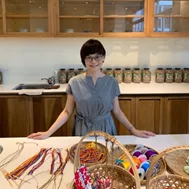
Exploring the Mechanism of 12-Year Basic Education Curriculum Research & Development and Coordination, to Analyze the Impact and Prospect of the Democratic and Public Governance in Educational Decision-Making
Yung-Shan Hung 洪詠善
Associate Researcher, National Academy for Educational Research
Abstract
The key aspect in Taiwan is that Taiwan has been committed to achieving educational equity for several years, enhancing teachers' professional development motivation through policy and curriculum reform, and nurturing lifelong learners to face future challenges.
With the global trend of sustainable development and technological innovation, Taiwan has been developing innovative industries and emphasizing democratic values, and striving to address student learning gaps and motivations from equitable and quality education policies amidst the demographics structure, which the population is aging and the birth rate is declining. For example, Taiwan students perform well in various international assessments. However, the fact is that the higher grades they are, the lower confidence they have; moreover, they feel more afraid of failure. To solve the problem, firstly, the 12-year national basic education was implemented in 2014 and the high school attendance rate reached 99%; the 12-year national education curriculum will be implemented in 2019, with the vision of "Achievement of every child, talent appropriateness, and lifelong learning", and the concept of spontaneity, interaction, and mutual benefit, cultivating students with the skills of independent action, communication, and social participation. Therefore, students will be able to face the complex and challenging world of life.
Last but not least, the new curriculum mechanism can promote networking and collaboration among educational actors. Meanwhile, people from all walks of life are sincerely invited to join together with open and transparent procedures. As a result, the development of the curriculum could promote the reflection and practice of the values of social coexistence.

How might the life cycle design of major education policies be improved to become more democratic and inclusive: Taking 2019 National Curriculum Guideline for Example
Yun-Zhen Yang 楊昀臻
Student Representative, Review Committee for the National Curriculum Guidelines
Abstract
When we talk about the 2019 National Curriculum Guideline. I want to focus on core competencies. The Curriculum Guidelines of the 12-Year Basic Education were developed based on the spirit of holistic education, adopting the concepts of taking initiative, engaging in interaction, and seeking the common good. According to the aforementioned principles, the curriculum guidelines introduced herein adopt the vision of developing talent in every student—nurture by nature, and promoting life-long learning.
When we talk about Inequality in Education a lot of people will use personal views to discuss but do not consider Stakeholders. When we discuss different issues, we need to let Stakeholders speak up for themselves and have more communication. This is the way to make policy more close to Stakeholders.
We also need to care about Mental health, World Mental Health Day 2021 Mental health care for all: let's make it a reality, now TAIWAN Youth Development Administration has a programme about Mental health.We use Open Government Partnership and deliberative democracy to discuss it.
Issue 2: How might the design of the national curriculum open spaces for self-determined education in public education?
Case: Self-Determined Education in Public Schools
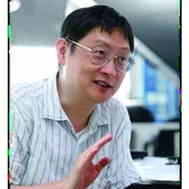
How to Bring the Paradigm of Self-Determined Education into the School System Through the 2019 National Curriculum Guidelines?
Gih-Jen Ding 丁志仁
President, Jendo Association for Education Reform
Abstract
In the past thirty years, the whole world is suffering from global warming, technology disruption and other dramatic changes. The development of human civilization has reached an unprecedented speed. Traditional public education system, using the education model constructed by the national system, is no longer able to cope with the changes and impacts of the times. Therefore, Ding advocated a “self-directed learning paradigm’’ that emphasizes the practice of knowledge in life situations; the need for learners themselves to participate in the governance of learning; the transformation of the teacher-student relationship from the traditional authoritative one to one of “experienced learners leading junior learners”; and the mutuality of the relationship between the group and the individual, rather than the loss of individual for the sake of the group. In the past decade or so, Taiwan has been conducting such programs outside the system. In order to make it easier for the public to access and experience the model of self-directed learning, Ding hopes that the new curriculum will be an opportunity for the "model of self-directed learning" to enter public schools. In order to further implement these initiatives, C.Y. Ting, in collaboration with the K-12 Education Administration, Ministry of Education, established the "Independent Learning Leaders Training Program", with the goal of training 20 public school teachers to "experience/practice independent learning" and to train future teachers who can lead students in independent learning in the public education field. The program includes study groups and co-curricular activities, internships in educational settings with a spirit of self-directed learning, presentation of results, and a collection of the training process.

How to Enrich Learning Contents of 12-year Basic Education with Community Resources: Take the Project of Community Universities and 12-year Basic Education for Example
Ing-Shiuan Ko 柯穎瑄
Director of Policy Advocacy, National Association for the Promotion of Community Universities
Abstract
To build an educational environment that " Makes All Students More Successful", it requires not only planning and designing policies and systems, but also the commitment and support of the sources of the entire community. Since 2018, with the support of the Ministry of Education, 15 community universities across the country have been collaborating with the 12-year basic education system. The conditions for this collaborative work are based on development of the new curriculum of 12-year basic education, which opened the space for the combination of social support (including research institutions, communities, industries and civil society organisations ......) to enrich teaching and learning activities. In addition, the core values of spontaneity, interaction and common good, emphasised by12-year basic education, and hopes that diverse learning activities can be developed in the context of daily life, coincide with the dedication of learning methods in local communities, which the community university has been working on for a long time.
The work of the community universities and the 12-year basic education programme focuses on three main aspects. These include: building relationships between cross-border education systems and th3 networks between learning resources; translating community learning content into lesson plans; and reorganising teaching methods and developing a methodology for collaborative teaching. In this presentation of the seminar, I will use six case studies, which is of connecting 12-year basic education and community resources by community university, to bring out some of the conditions of the system for the development of the 108 Curriculum supported by community university, and to point out the strategies and key points of community power in the development of 12-year basic education. These include the use of community resources as support, supplementing the learning environment of disadvantaged areas and students, and building a network platform of regional organisations for 12-year basic education to accumulate diverse learning resources in the network and to create innovative ideas on learning contents and methods. Lastly, I will reflect on cross-border collaboration in education, in the hope that in the process of getting out of the box, we can always be reminded not to replicate the old power relations between teaching and learning, and open up more room for imagination of learning from the perspective of the system.
In-depth discussions
- World Cafe: How might we better account for student voice in policy-making?
- World Cafe: Envisioning education in 2030
Day 1 · 23 October 2021 · 15:50–17:20 (GMT+8)
Session 2: Rural/Indigenous Education and Regional Revitalization
Chair: Shenglin Elijah Chang 張聖琳, Associate Dean, d.School, National Taiwan University
Issue 3: How and what types of vocational education transformations might facilitate the development of rural youth and indigenous families in remote regions?
Case: Daxi Vocational education
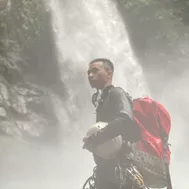
How and what types of vocational education transformations might facilitate the development of rural youth and indigenous families in remote regions?
Tsung-Chun Li 李宗俊
Former Director, Department of Produce Marketing, Jih-Shan High School
Abstract
In Taiwan, vocational education is ostensibly an alternative pathway for students to escape from further education, but in fact, the 50% of students who choose vocational education in high school are generally those who lack academic advantages. And these students originally enrolled in vocational schools to get rid of the spell of further education and find their way back to the stage of "poor academic performance" learners. However, under the fear of further education and low academic qualifications in vocational education, they’re still learning in the traditional framework of filler, textbook, and standardised certificate learning...most of them still cannot find the motivation to learn.
We used Chi-Shan High School, a "rural" technical school, as a case study to reflect on the problem of "dividing technical education into performance levels" rather than "streaming" according to students’ aptitude. Through the "Education and Community Co-creation" learning design of the Agricultural Marketing Department at Chi Shan High School, students are able to explore themselves in a community, and are motivated to learn in an "experiential" and "event-based" way. Conversely, the community is revitalized by the input of teachers and students in the program, which compensates for the human resource problems often encountered by local creators.
In addition to restarting the learning motivation of technical youth, the chaperones (teachers or youth) can also connect with the community and accumulate a network of resources in the process of teaching practice. When the chaperones' own values or self-identity can be deeply rooted in the community, and the community can be used as a back-up for the practice, the dilemma of "lack of teachers and high turnover rate in remote areas" can be dealt with at the same time.
In short, we empowered the "social design" to redesign the whole school administration and teaching in the context of the land and the teaching field, and to find the right "prescription" for the problem.
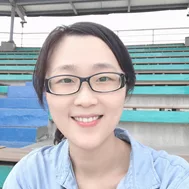
The Hometown Circle: Community Design for Education
Hui-Chin Huang 黃慧勤
Lecturer, Department of Interior Design and Management, Chien-Hsin University of Science and Technology
Abstract
Starting with a critique of "Hometown, Whose Place? We tried to start with a community education initiative and developed a local studies-based curriculum in collaboration with Chi Shan High School. The educational design of "Daxi wow wow wow", which was based on a trilogy of experience, feelings and subjectivity, and the co-learning programme with the local community, are a 10-year community accompaniment that has led many young students to return to their hometowns for employment and entrepreneurship! In this sharing, I propose a cumulative action of three processes, namely educational design, community design and local creativity. From the educational actions of young people returning to their hometowns, and the long-term educational programmes in the fields of the community, the educational imagination of the past, present and future of the place is linked. Such a linkage also forms an invisible educational community that supports opportunities for young people to return to their hometowns to experiment. From analysing the context of youth community learning and action, we found that social relations are a condition for young people to return to their hometowns to revitalise it, and the exploration of local knowledge becomes the basis for local attachment, and the social relations constructed from the community curriculum design form the hometown circle!
Issue 4: How might disadvantaged communities revitalize themselves via educational innovations? How might universities and other actors bridge the equity gap of educational resources and opportunities?
Case: Pinglin Junior High School and Pinglin District
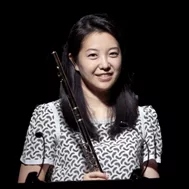
Taiwanese Folk Song Sio-po-kua and the Transformation of Local Cultural Curriculum
Chia-Fen Tsai 蔡佳芬
Former Director-General, Bureau of Culture, New Taipei City
Abstract
In May 2014, the author went to Pinglin District of New Taipei City to participate in an event, which facilitated the opportunity to work with the teachers and students of the National Taiwan University Graduate Institute of Building and Planning. They invited the author to customize local music for Pinglin, and the author unexpectedly discovered the endangered Taiwanese folk songs Sio-po-kua. Based on the author’s research, Sio-po-kua is the root of many folk arts in Taiwan. However, almost only the elderly people over 70 years old have heard or know how to sing. This precious cultural asset needs to pass on to next generations by education and to create innovative applications as soon as possible. The principals of Pinglin Elementary and Junior High School took the lead in responding to this idea.
Nevertheless, Pinglin is away from the metropolitan area and the transportation is inconvenient. There is only one junior high school and one elementary school, and each of them has more than one hundred students. With limited educational resources, how to promote this unprecedented cultural curriculum is extremely challenging. Therefore, the author and the members of the “Agricultural Humanity” project of NTU D-School invited experts from interdisciplinary fields to cooperate with Pinglin High School. To change the traditional education method from different practices and to enrich a rather active learning atmosphere, they did field research and inventions of audio-visual composition, teaching material design, and community participation. Thanks to everyone's hard work, students in Pinglin began to realize the beauty and preciousness of their hometown culture, and gradually showed more cultural awareness and self-confidence. The elders who were originally shy to sing Sio-po-kua turned into music teachers in the native language classes. Through the procedure of learning inheritance, it also promoted cross-generational interaction in the community and brought more outsiders to visit Pinglin, opening up opportunities and friendship for cross-border cooperation.
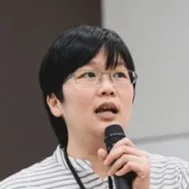
Knowledge Ties between NTU Students and Pinling Young People
Yi-Yi Chen 陳怡伃
Associate Professor, Department of Social Work, National Taiwan University
Abstract
Knowledge ties refers to the relationships between local places and the intellectuals of universities, in contrast to place- or task-oriented ties. Such social networks develop organically and would nurture a social network that sustains the learning and growing of both university and community. This study examines NTU students’ participation in Pinglin. With data from eight interviews, it is found the students’ trajectory develops organically, reciprocal relationships require multiple support systems, and a few positive social impacts are observed. In comparison with nearby urban areas, the education deprivileges of Pinglin are rooted in macro structure such as geographic segregation and construction restriction. The support systems lack diversity in terms of local economy, family and peers. Community participation of universities’ students and teachers may engage local actors’ motivations and learning experiences. Diversity is the key.
In-depth discussions
- Design thinking sprint: Designing Local-based empowering curriculum for marginalized youth
- Panel discussion: On the role of arts and cultural education’s role in the transformation of marginalized regions
Day 2 · 24 October 2021 · 12:30–14:00 (GMT+8)
Session 3: Experimental Education
Chair: Adler Yang, Director of Research & International Affairs, ZA Share; Founder & Researcher at Awakening Co-op Lab
Issue 5: Who has access to experimental education and why? How might experimental education become more inclusive to all?
Case: Regulatory constraints and financial barriers to experimental education
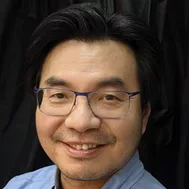
Protecting students’ right to learn and parents’ right to educational choice through democratic processes in Taiwan
Yi-Guang (Tim) Chen 陳怡光
Founder, Taiwan Homeschool Advocates
Abstract
The rise of experimental education, as alternative education is officially known, largely coincides with the democratization of Taiwan. On 10 April, 1994, more than 30,000 parents, students, professors, teachers and NGOs took to the streets to demand education reform, just 3 years after the National Assembly abolished the Temporary Provisions against the Communist Rebellion. Prior to that, any mass demonstration would have resulted in imprisonment for all participants. 5 years later in 1999, the Educational Fundamental Act was enacted by Taiwan’s parliament, the Legislative Yuan, and parental choice of education became a right.
Since then, Taiwan has led the region if not the world in legal protection of parental choice of education. Taiwan passed the Enforcement Act for Non-school-based Experimental Education at Senior High School Level or Below, Enforcement Act for School-based Experimental Education and Act Governing the Commissioning of the Operation of Public Schools at Senior High School Level or Below to the Private Sector for Experimental Education, commonly known as The Triple Laws of Experimental Education, in 2014. The Triple Laws were amended in 2018 to further protect parental choice of education and the rights of experimental education students.
While the penetration of Non-school-based Experimental Education has increased by 7 folds in 10 years, other experimental educations have only limited success. The biggest obstacles for school-based experimental education are location, location and location. The law gave educators a lot of freedom to design and run their schools. However it failed to liberate the experimental education schools from the arcane zoning regulations. Therefore only local governments with plenty of underutilized public schools have managed to turn them into experimental education schools. The next challenge for experimental education is to set up an accredited digital university for self-determined learners.
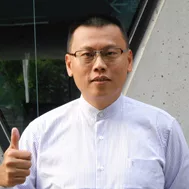
From Qianzhen Caoya's Placemaking to Experimental Primary, Middle Schools and Universities: A Vision of Co-raising Children in Qianzhen Caoya, KaoHsiung
Tien-Yi (Jordan) Hsiao 蕭典義
Founder, Only Experimental Education
Abstract
In Taiwan, many disadvantaged families think of education as a way of escaping poverty. However, Tien-Yi(Jordan) Hsiao , who has lived in Qianzhen Caoya, KaoHsiung for a long time, realized that the current linear education system only sends the students farther from their hometowns and does nothing to the local problems. The question is, how to build an education system that really saves the disadvantaged families from poverty and helps the local development? According to Hsiao, it is important to combine “Experimental Education”, “Regional Revitalization” and “Career Exploration Education”into the education system. “Experimental Education”focuses on a person-centered approach, helping each child find their talents and interests and develop them into a career journey. “Regional Revitalization” or “Rural Innovation” focuses on finding the uniqueness of each region and creating unique industries that are irreplaceable in that region, so cultures and cities can develop sustainably. The combination of “Experimental Education” and “Regional Revitalization” leads the students to explore their future careers while learning more about their hometowns.With this combination, the students are able to find their inner passions of learning in response to their external life needs.
This kind of course called “18 Academic Groups: Fun and Learning in Community” not only helps the students explore their future careers but also helps the local businesses for it sends students to internships. By adding the course to the schedule of local public schools, it also motivates them to develop more special courses and encourages teachers to adopt a more literacy-oriented way of teaching. Lastly, this kind of education system builds up a “community ecosystem” which helps promote the local economy and build perceptions.
Currently, Tien-Yi(Jordan) Hsiao is in his first year of implementing the Local Creativity Plan of the National Development Council. He has started cooperating with nine of the Qianzhen Caoya’s local businesses to design workplace experience courses. Together with Prof. Shiang-Yi Guo, former executive secretary of the Centre for Career Planning, Ministry of Education, Hsiao is now also developing an occupational suitability test and the E-portfolio for students’ workplace experience to record their explorations. Hopefully there will be more organizations making joint efforts to turn around Qianzhen Caoya’s difficult situation as an urban fringe in the future.
Issue 6: What are the challenges in the development of Taiwan-based alternative education models? How should their tensions with the government be addressed?
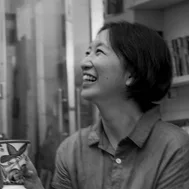
What are the challenges in the development of Taiwan-based alternative education models? How should their tensions with the government be addressed?
Wei-Ning Huang 黃瑋寧
Vice Principal, Seedling Experimental Elementary School
Abstract
The main argument in this session is that, Educators should keep exploring the essence of learning of human beings no matter the disruption or discontinuity brought by any events. On the other hand, we should try to shape an inclusive education field to provide various possibilities to different actors, ie., teachers, children, parents, citizens...etc. It needs dialogues between the members about the imagination of the future of society.
The experiences of Seedling Elementary school show that the learning activities keep going via different mediums when the teachers appreciate the uniqueness of each learner and nurture them by leveraging the advantages of blending learning. In the past 27 years, we have kept curiosity about human’s development and try not to stick to a single theory or practice to answer this question when it is applied to a specific individual child.
While “experimental” or “alternative” education had brought utopian visions to the stakeholders by recently those words became “remedies” for schools facing the challenge of low birth rate, and ambiguities arouse when these words are appropriated.
It’s a living progress accompanied with the nuisance of Taiwan’s civil society. There's still a long way to go in the struggle between the existing education system and new demands from the civil society, which is to look for surpassing a pale evaluation system to define a child, a person, by an achievement-oriented standard. It’s a critical point to have constructive dialogues between different parties involved.
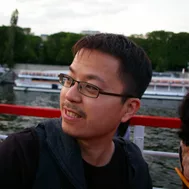
Who’s the owner of Humanity School?
Le-Sheng Zhou 周樂生
Principal, Humanity Experimental Primary & Junior High School
Abstract
In 2002, Yilan County initiated a charter school in the hope that more families would receive progressive education, which led to the birth of Humanities Elementary School. This 20-year educational innovation contributed to the creation of the 108 curriculum, and also became the predecessor of the Public-Commissioned and Civic-Operated Experimental Education Model legislated in 2014. With more than a decade of experience in mixed-age pedagogy, thematic integrated curriculum, and domestic and international fieldwork learning, Humanity Primary and Junior High School has gradually completed an empowering education system that upholds the belief in human development, and has significantly transformed the public school system, including teacher recruitment and development, curriculum planning and implementation adjustments, student analysis and feedback, and school classroom system and organizational culture, under the resources and framework of the public school system. Over the past 20 years, the ideals of the civic-led school operation and the framework of the public school system have collided, compromised, and accumulated into new rules and regulations that have gradually clarified the boundaries of the Public-Commissioned Civil-Operated School Model. The core issues are: What are the respective rights and obligations of the government, schools, and parents, and how to resolve conflicts between them? These are the issues that can only be resolved after actual operation, and they are also the values and contributions of the Humanity School as a forerunner Public-Commissioned Civil-Operated School.
In-depth discussions
- Panel discussion: The authority and boundaries of government’s role in citizen-initiated education reform
- Workshop: Discovering the abundance of educational resources in society
Day 2 · 24 October 2021 · 15:20–16:50 (GMT+8)
Session 4: Social Change as Education, Education as Social Change
Chair: Adler Yang, Director of Research & International Affairs, ZA Share; Founder & Researcher at Awakening Co-op Lab
Issue 7: What roles does education reform play in the overall social change, and vice versa?
Case: Quality Education Forum and the Wellbeing for the Next Generation Project
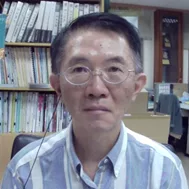
What roles does education reform play in the overall social change, and vice versa: A Case Study of Quality Education Forum and the Wellbeing for the Next Generation Project
Hwai-Ming Renn 任懷鳴
Director of Education Policy Center, Kaohsiung Teachers Union
Abstract
Quality Education Forum is a large-scale education seminar organized by the private sector; it has been held once a year since 2010. Participants include: government officials, congressmen, school personnel, experimental education personnel, parent groups, teacher groups, community colleges, various innovative education practice teams; topics include policy initiatives, innovative education sharing, practical technology exchanges, and its functions lies in gathering professionals in various fields, discussions and breakthroughs on practical issues, and promoting consensus regarding policies.
The Wellbeing for the Next Generation Project was initiated at the Quality Education Forum in 2011, and it has become a permanent agenda every year thereafter. The idea of the project is that: Imagine an ideal society for future generations, and try to propose corresponding policies including public education, industry and environment, government finance, etc.
Taiwan is the nation of the third wave of democratization. Then the education reform movement was accompanied by the democratization movement in the 1980s, initiated and promoted by the private sector. In the first half of the past 30 years, the major changes in the education sector had been the eradication of political control. In the latter half, it was the reverse of the problems caused by the traditional public education paradigm. In facing the coming ecological disasters and technological subversion, education reform should move towards a new paradigm of self-directed learning, and have more sense of adaptation for the future.
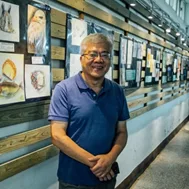
Covid-19: An Opportunity for Education Re-Change
Kuo-Ching Hsieh 謝國清
President, Beitou Community University
Abstract
From the flipped classroom to the implementation of the 108 curriculum, education in Taiwan has been undergoing a dramatic transformation. However, the changes in the teaching field were very limited. I did not expect that the Level 3 Alert of Covid-19 would completely overturn the traditional teaching and learning practices.
The Level 3 Alert has stopped all physical courses, but under the Ministry of Education's "no classes, but keep learning" guidelines, school teachers must switch to online teaching, and students should naturally follow the online learning process. Although "teaching" and "learning" are closely related, they are each presented online with their own difficulties. In addition, the "parental class observation", which is required by the 108 curriculum, is completely invisible in the online teaching process, which inevitably causes parents to comment on it.
Compared to compulsory education, the lifelong learning system has a completely different development. When the epidemic is serious, the government requires the lifelong learning system to shut down physical courses. However, the lifelong learning system has naturally developed a diversified and plentiful online teaching mode. Among them, community colleges have existed for more than 20 years as the main force, 89 community colleges with about 15,000 courses and over 400,000 learners nationwide are estimated to have converted 30-40% of their courses to online teaching.
In just three months of Level 3 alert, although many innovations in online teaching have been stimulated, many problems remain to be solved. As the epidemic eases, online gradually returns to physical. However, no one is sure when the next wave of alert will come again. Thus, will the teaching experience of that period of Level 3 alert become a reference for the next round of education reform? It is worth looking forward to.
Issue 8: How might education innovation become a trend in the civic and youth culture? How might such civic/youth-led education innovation bring chemistry to cross-sector partnerships?
Case: ZA Share’s cross-sector partners
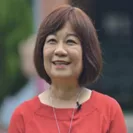
The Synergy Between Education and Social Evolution
Mei-Ling Chen 陳美伶
Former Chair, National Development Council
Abstract
As a 63 year-old former public servant of nearly 40 years, I have gratefully grown to benefit from the outcome of this country’s landmark transformations. Taiwan’s historic advancement to first become an economic miracle and now a developed and democratic economy stems from several fundamental changes since the 1950s, notably including the removal of martial law enforcement in the 1980s and the abolishment of persecution against democratic civil movement in the 1990s.
In more than one, I have actively participated in Taiwan’s evolution first as a law professional, then local and central government official and lastly as minister of the National Development Council (NDC). As NDC minister, I oversaw the planning, deployment and supervision of Taiwan’s national economic development and infrastructure projects.
With my track record as a policy maker and an official working through the last three transitions of power between KMT and DPP, I can speak from the heart and with experience that education is the key to successful enforcement of a good policy or law.
As an experienced former bureaucrat, I can spot and certainly appreciate lawmakers’ good intentions when making law by adding an educational component and some even with specific training time requirements. Training examples include but are not limited to, gender equality, workplace equality and anti-money laundry, etc. While we await a more systemic assessment of the effectiveness of these well-intended training sessions, we may want to look into adding the family element as a way to deepen these training sessions. For instance, Taiwan has been known for its success of household’s garbage separation and recycling to reduce trash accumulation and greenhouse emissions. The transformation grows as the well-educated and well-trained school aged children bring their practice home and train families to follow suit.
Perhaps it’s because of the historic baggage that Taiwan still holds, education has not met its objectives of individualized teaching to inspire one’s potential or teaching without discrimination. Instead, it often is criticised for its spoon-feeding or forced-feeding practices. It was not until recently that experimental education has been accepted with legal status and credibility.
As mentioned earlier, NDC shoulders the responsibility of Taiwan’s national development. Although in the government, each ministry is responsible for its specific mandates and enforcement thereafter, NDC is uniquely positioned as the government’s interagency coordinator on the country's overall infrastructural buildout and its soft power of talent cultivation. As such, leaders of NDC are commanded for their foresight, leadership by example and able assistance to their partnering ministries.
During my tenure as NDC minister, my team and I actively created value-added incentives to encourage the birth of innovative industries, new businesses and young start-ups to stimulate the economy, create jobs and increase the skilled labor force. I also focused on tackling the issues such as Taiwan becoming an aging society with low birth rate; revitalization of the rural economy; and the imbalanced development and utilization of national land and property.
Based on what I have learned and what I envisioned, I would like to share with you today my thoughts on how education is vital to the development and revitalization of the rural economy.
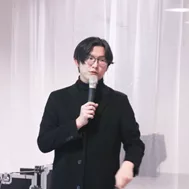
Give me a textbook, and I’ll turn it into an art gallery!
Po-Wei (Wayne) Chang 張柏韋
Cofounder, AesthetiCell
Abstract
In Taiwan, kids go to the art museum “less than one time” in a few years on average but Taiwan's kids will be spending over 24,000 hours with “textbooks” after the policy forcing kids to have 12-year education from school. We cultivate the next generation to be elite but do not cultivate their ability of aesthetic appreciation. They might have less chances to have more colorful life experiences.
Hence, we decided to begin the revolution with the textbooks. With more abundant aesthetic experience, textbooks were deliberately designed with each different painting, visual composition, colors, and interactions in different lessons. We wonder whether it is possible that one day, these school “textbooks” can be transformed into “art museums” put in kids’ school packs. Under the circumstances of not adding more studying burdens, children can meanwhile have aesthetic education.
Furthermore, after teachers’ teaching experiments with our textbooks, we adopt their advice and make them much more pragmatic. Getting so much help from teachers, our designed textbooks let students study Chinese, English, math, science, and society with ease and they will get more involved in class.
“Aesthetic Textbook Project'' is a crowdfunding project with more than 3,000 people donating their money on the web. Almost 200 school teachers currently have teaching experiments with our textbooks. We have distributed over 10,000 textbooks. Based on our survey, 98.7% of teachers think these re-designed textbooks let their students get more involved in class and love the courses. To keep enlarging our influence, we collaborate with two major publishing houses in Taiwan, Nani Book Enterprise and Kang Hsuan Educational Publishing Group, discussing the perspective of aesthetic textbooks. It proves to the government that aesthetic textbook promotion is of importance, motivating the government to discuss bringing it to laws.
In-depth discussions
- World Cafe: Dissolving the boundary between school and society
- World Cafe: Finding your leverage for education change wherever you are in the system
Titles, talk titles and abstracts as printed in the seminar handbook (Chinese) and the abstracts booklet (English).
How this connects
The centre is this page. Each mark is a page or a person that the site’s records link to it; a line between two marks means those two are linked as well.
All 36 connections
Case study
Library item
- Talk report: Tien-Yi (Jordan) Hsiao, “From Qianzhen Caoya's Placemaking to Experimental Primary, Middle Schools and Universities: A Vision of Co-raising Children in Qianzhen Caoya, KaoHsiung” (KASpaces Taiwan National Seminar, 2021)
- Talk report: Po-Wei (Wayne) Chang, “Give me a textbook, and I’ll turn it into an art gallery!” (KASpaces Taiwan National Seminar, 2021)
- Talk report: Mei-Ling Chen, “The Synergy Between Education and Social Evolution” (KASpaces Taiwan National Seminar, 2021)
- Talk report: Yi-Guang (Tim) Chen, “Protecting students’ right to learn and parents’ right to educational choice through democratic processes in Taiwan” (KASpaces Taiwan National Seminar, 2021)
- Talk report: Yi-Yi Chen, “Knowledge Ties between NTU Students and Pinling Young People” (KASpaces Taiwan National Seminar, 2021)
- Talk report: Gih-Jen Ding, “How to Bring the Paradigm of Self-Determined Education into the School System Through the 2019 National Curriculum Guidelines?” (KASpaces Taiwan National Seminar, 2021)
- Talk report: Kuo-Ching Hsieh, “Covid-19: An Opportunity for Education Re-Change” (KASpaces Taiwan National Seminar, 2021)
- Talk report: Hui-Chin Huang, “The Hometown Circle: Community Design for Education” (KASpaces Taiwan National Seminar, 2021)
- Talk report: Wei-Ning Huang, “What are the challenges in the development of Taiwan-based alternative education models? How should their tensions with the government be addressed?” (KASpaces Taiwan National Seminar, 2021)
- Talk report: Yung-Shan Hung, “Exploring the Mechanism of 12-Year Basic Education Curriculum Research & Development and Coordination, to Analyze the Impact and Prospect of the Democratic and Public Governance in Educational Decision-Making” (KASpaces Taiwan National Seminar, 2021)
- Talk report: Ing-Shiuan Ko, “How to Enrich Learning Contents of 12-year Basic Education with Community Resources: Take the Project of Community Universities and 12-year Basic Education for Example” (KASpaces Taiwan National Seminar, 2021)
- Talk report: Tsung-Chun Li, “How and what types of vocational education transformations might facilitate the development of rural youth and indigenous families in remote regions?” (KASpaces Taiwan National Seminar, 2021)
- Talk report: Hwai-Ming Renn, “What roles does education reform play in the overall social change, and vice versa: A Case Study of Quality Education Forum and the Wellbeing for the Next Generation Project” (KASpaces Taiwan National Seminar, 2021)
- Talk report: Chia-Fen Tsai, “Taiwanese Folk Song Sio-po-kua and the Transformation of Local Cultural Curriculum” (KASpaces Taiwan National Seminar, 2021)
- Talk report: Le-Sheng Zhou, “Who’s the owner of Humanity School?” (KASpaces Taiwan National Seminar, 2021)
- Talk report: Yun-Zhen Yang, “How might the life cycle design of major education policies be improved to become more democratic and inclusive: Taking 2019 National Curriculum Guideline for Example” (KASpaces Taiwan National Seminar, 2021)
Person
- Ozzie (Yang-Chih) Su
- Gih-Jen Ding
- Tien-Yi (Jordan) Hsiao
- Chia-Fen Tsai 蔡佳芬
- Shenglin Elijah Chang
- Po-Wei (Wayne) Chang 張柏韋
- Mei-Ling Chen 陳美伶
- Yi-Guang (Tim) Chen 陳怡光
- Yi-Yi Chen 陳怡伃
- Kuo-Ching Hsieh 謝國清
- Hui-Chin Huang 黃慧勤
- Wei-Ning Huang 黃瑋寧
- Yung-Shan Hung 洪詠善
- Ing-Shiuan Ko 柯穎瑄
- Tsung-Chun Li 李宗俊
- Hwai-Ming Renn 任懷鳴
- Le-Sheng Zhou 周樂生