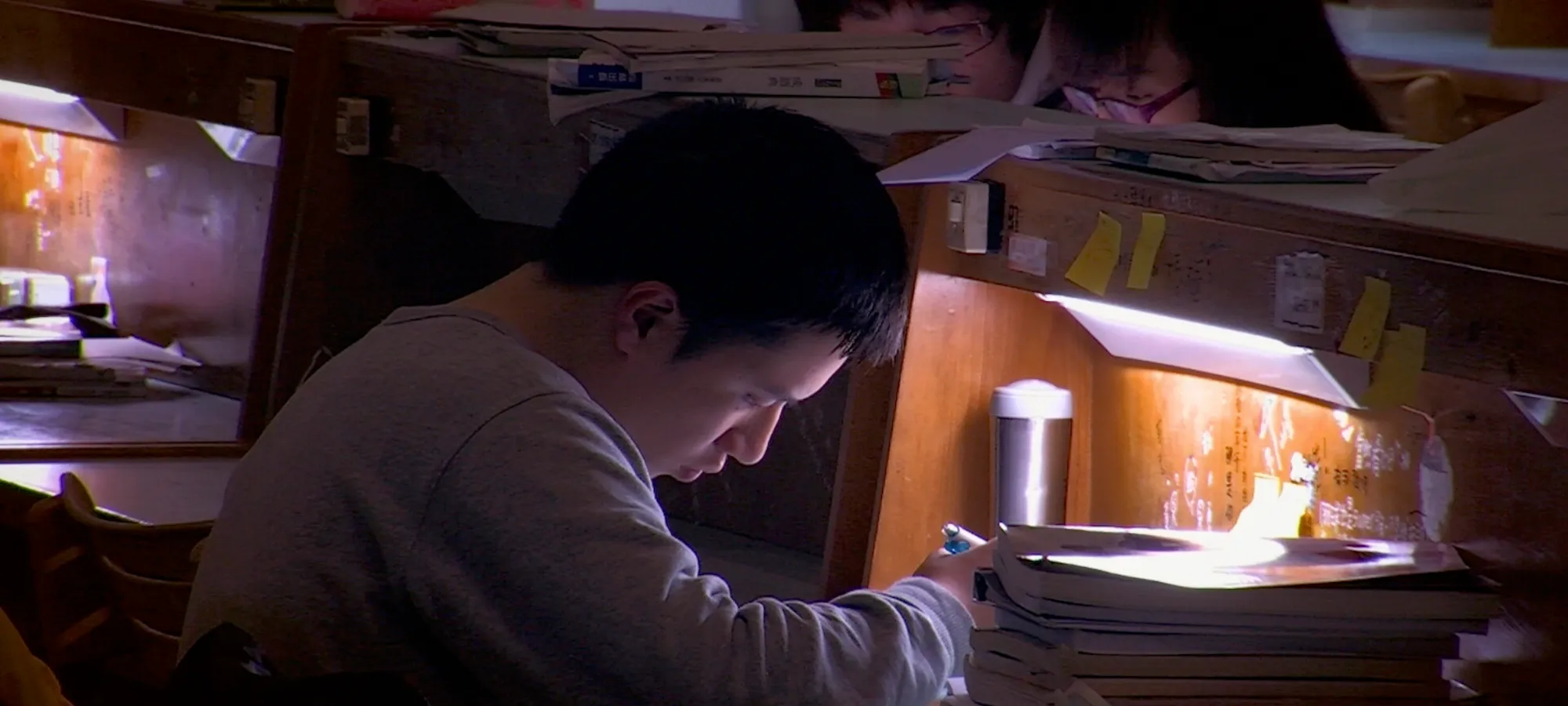
A documentary by Adler Yang
If There Is a Reason to Study學習的理由
Is giving up your dreams what it means to grow up?
Begun when he was 14, finished seven years later. Premiered in cinemas in Taiwan on 12 August 2016.
- 96 minutes
- In Mandarin
- 2009–2016
Watch the film’s own call
The film’s 2016 crowdfunding video (4 min 20 s, in Mandarin).
The story
Act 1
A school without grades
Humanity School has no grades and no rankings, and its students explore who they are at their own pace. In 2009 they have to take the Basic Competence Test for the first time, the exam that sends students to different schools and life tracks according to their scores.
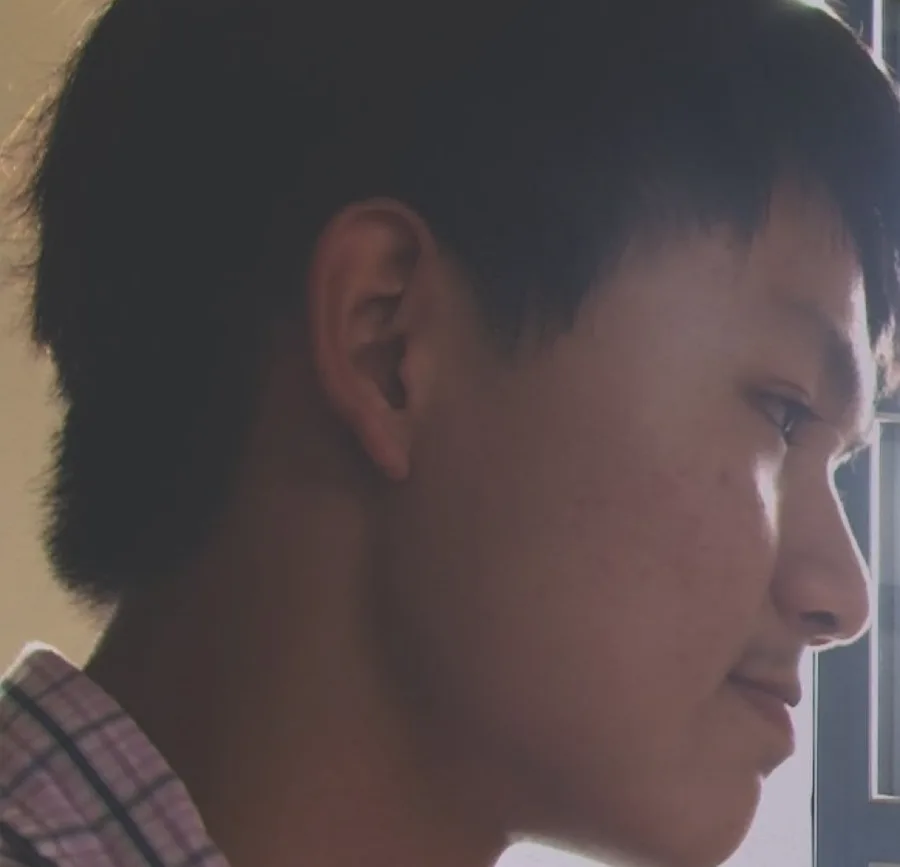
Fourteen and in eighth grade there, Adler Yang picks up a camera to record what his friends think about moving on.
Act 2
The year of the exam
Four friends sit at the centre of the film.
Li-Ann立安
Scorns exam-driven schooling, then is won over.
He teaches himself to assemble parts and make 3D animation. Slowly won over by what exams reward, he lets his own interests go once he has done well.
Yu-Xuan雨萱
Top grades, yet she would rather perform.
She cannot choose between the two.
Pei-Ling沛玲
Fears that her love of dance leads nowhere.
She studies hard, yet her scores will not rise.
Xing-Hao興豪
Face reality, or keep chasing the dream?
His musical talent shines, until his music teacher quits to become an office worker.
Around them, the classroom changes
- The girl with the guitar is still surrounded by friends, but she no longer opens her heart so easily.
- A teacher says it would be a waste of her ability not to study.
- In a corner, a girl studies alone, brow furrowed: “Other people are just smarter than me. I regret playing so much before…”
- The band leader hides what is on his mind behind jokes, while his father wants him back on track.
- The friend who mocked exams as “agar jelly: no nutrition, just the feeling of being full” now warns: “Exams are your only direction. You shouldn’t think too much…”
Act 3
The camera turns around
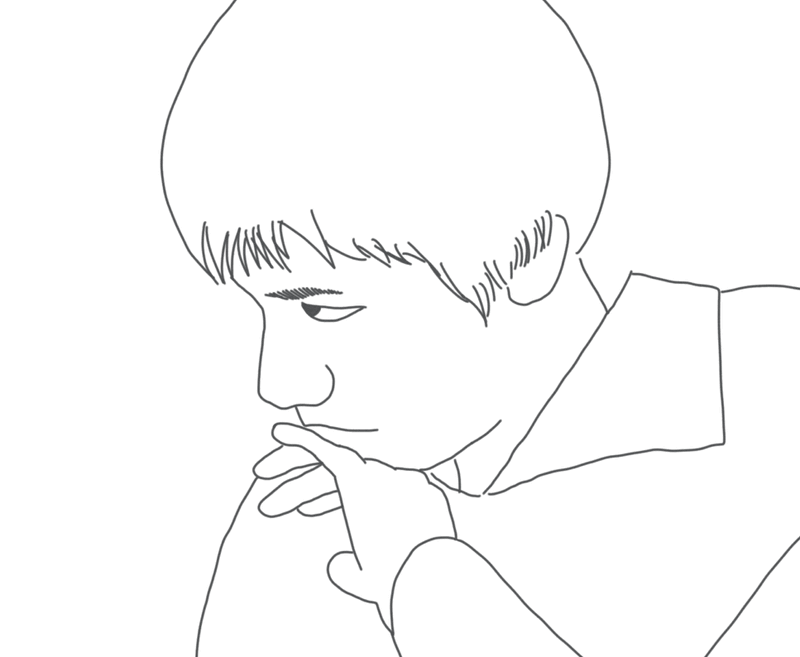
Adler could stay out of the exam and keep learning at home. Instead he follows his friends’ steps as an experiment, registering for the test to find out why everyone is so caught up in it, and gets trapped as well.
Strikingly, all of his friends are giving up their passions and dreams for a “safer path”.
Act 4
Seven years, one question
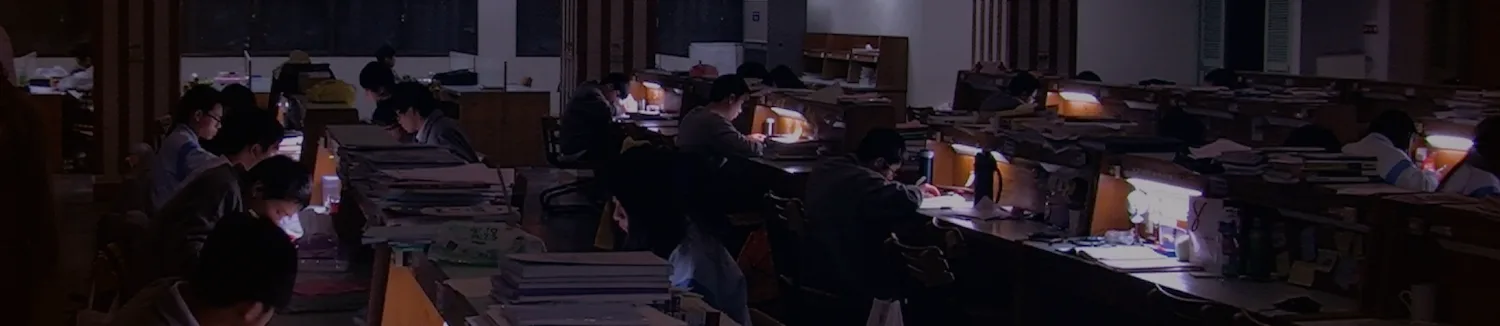
The filming does not end with the exam. For seven years he keeps returning to his friends with the camera, talking with them and exploring their pasts, until they are in college. The film is meant as a mirror, and it ends on a single question to his closest friends:
“The you who dared to dream and think: where have you gone?”
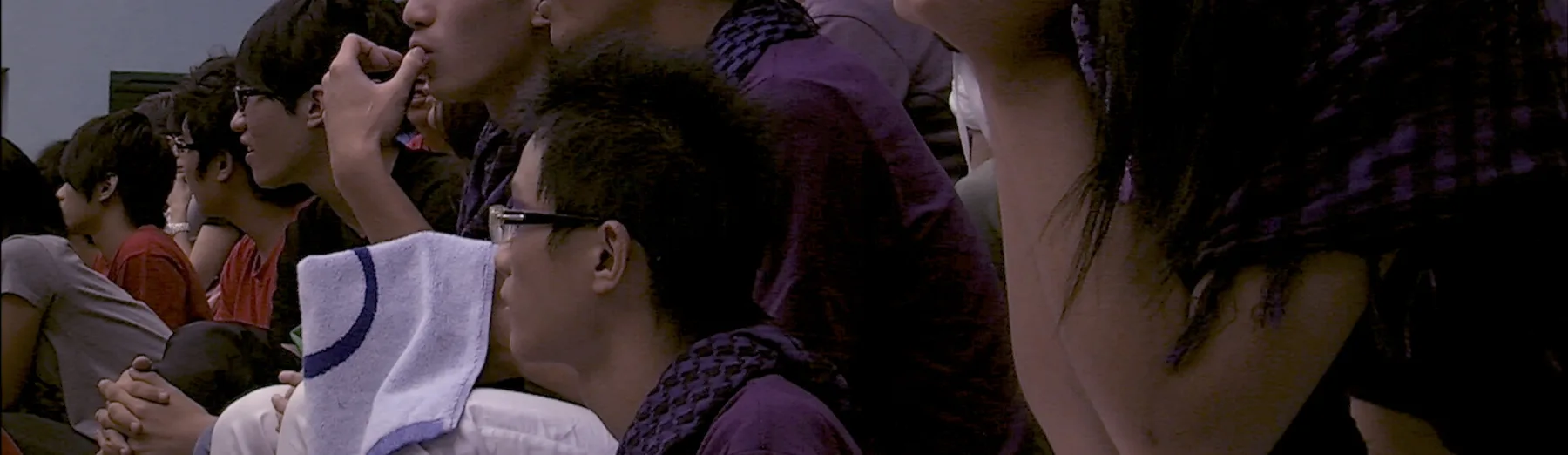
Voices from the film
“Other people are just smarter than me. I regret playing so much before…”
A classmate in the film
“Exams are like agar jelly: no nutrition, just the feeling of being full.”
A classmate in the film
“Exams are your only direction. You shouldn’t think too much…”
A friend, in the film
“Where did you go, you who dared to dream?”
Adler Yang, to his friends
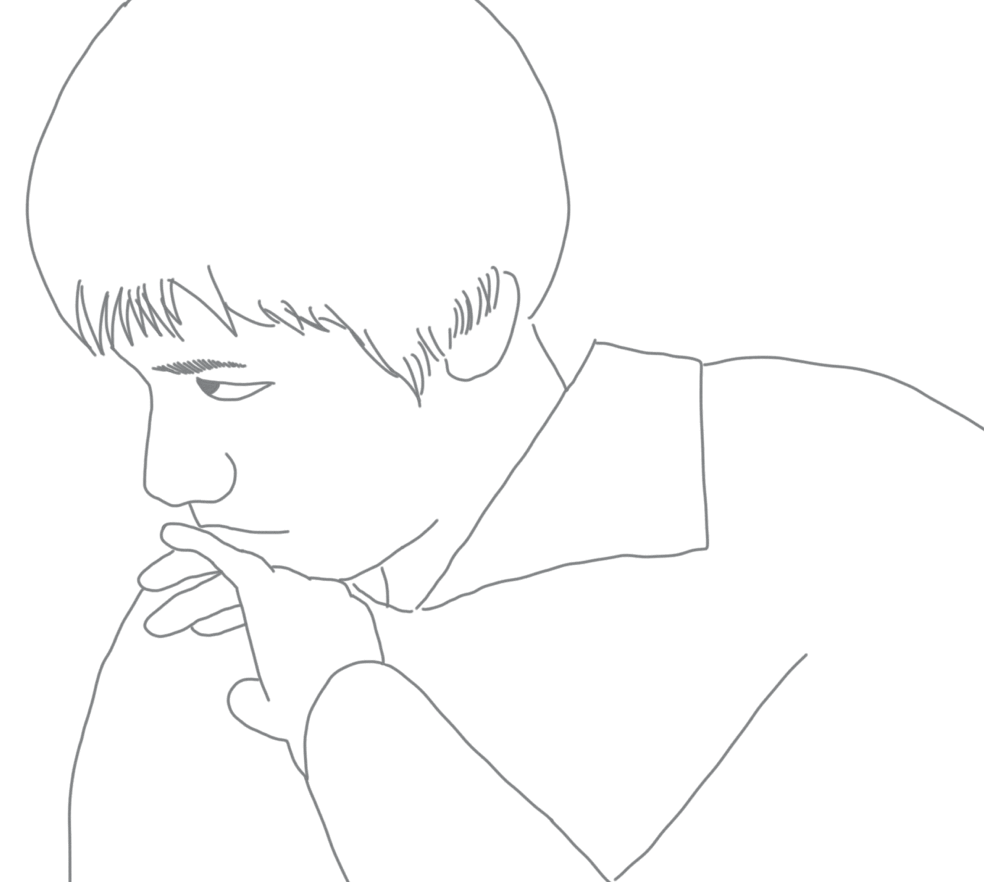
Questions the film was made for
- For students
“How can I make others understand how I feel?”
- For parents
“I know my child has something on his mind, but he never says it.”
- For parents
“Where has my child’s spirit gone?”
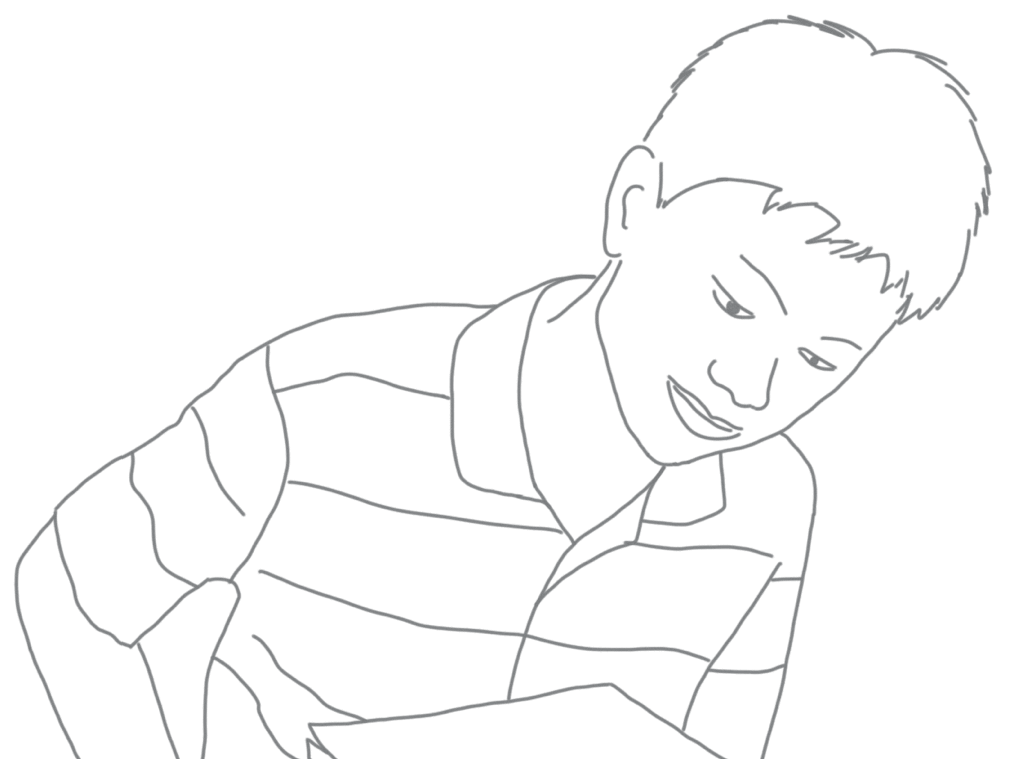
Why he made it
“The footage in this film was paid for with the wearing-down of countless young lives. If I could choose, I would not need to have made this film, and I would not need these awards. I would trade them all for a childhood full of meaning and joy for these children.”
Adler Yang, on receiving an award at the 2014 Hong Kong Chinese Documentary Film Festival
From the age of 14, three commitments
- Be a mirror for his friends.
- Open a window for young people onto the world outside school.
- Start from himself, and help build a healthier cradle for society.
“Drifting with the current, we feel safe but quite lost. And so many people spend a whole lifetime climbing a peak that is not their own.”
Adler Yang, TEDxTaipei, 2014
Seven years, from fourteen to twenty-one
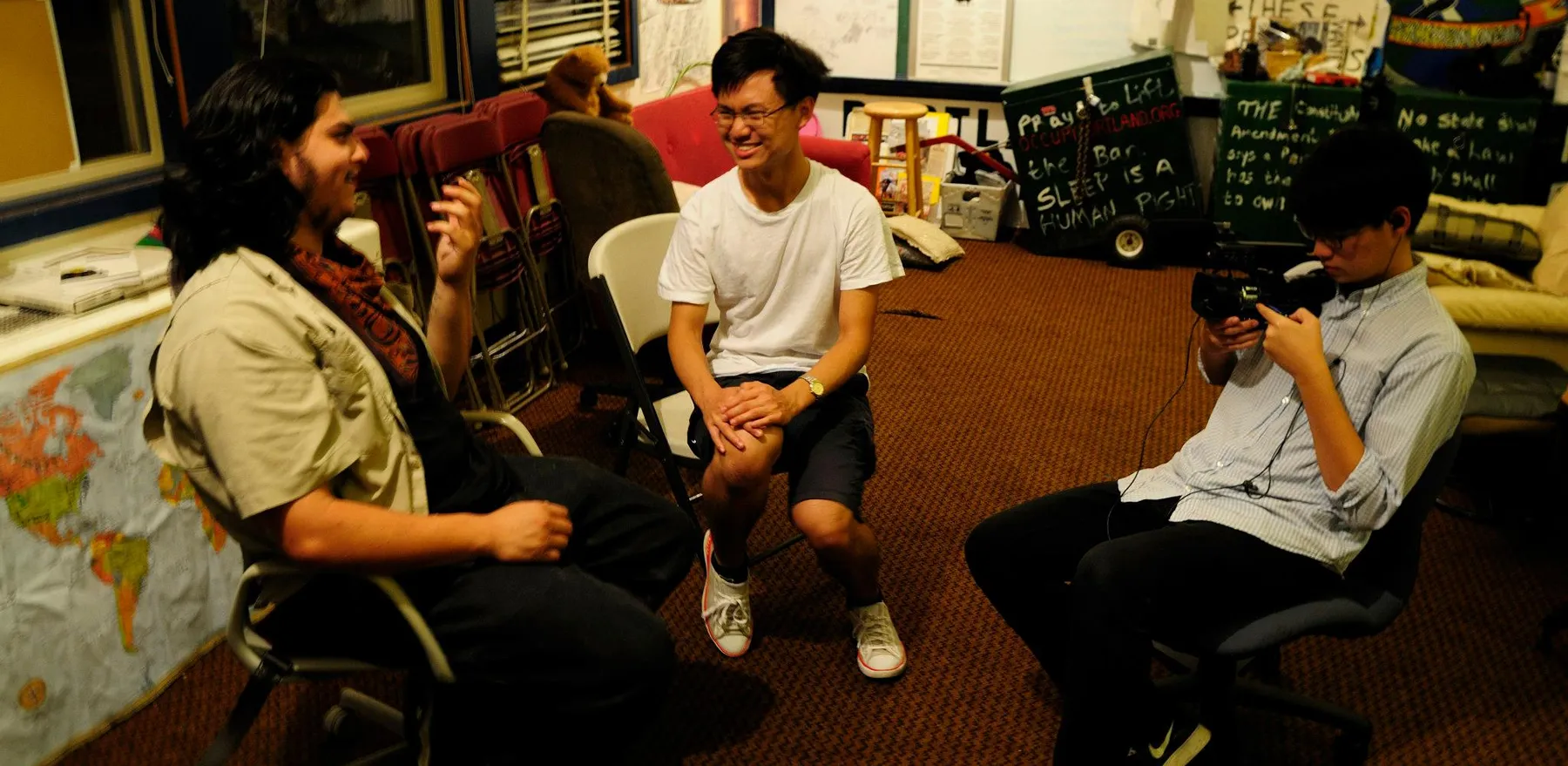
Adler began filming in March 2009, at 14, and was 21 when the film was done.
In those years he carried, for the first time, a funding gap of about NT$1 million. He did not lean on his parents: he raised money, translated and taught to earn it, and paid the professional editors, composer and animators who worked on the film. The one person who was never paid was the director.
The production was open to teenagers, who joined the crew and worked on a real project with a social purpose.
What people said
“…honestly facing the many feelings and reflections around entrance exams, and gradually building a sense of agency and self-worth through doubts about the future, while also reflecting deep problems in education in Taiwan and the Chinese-speaking world…”
Kuo Li-Hsin (郭力昕) Film professor, critic and festival judge
“Of films that dig into Taiwan’s almost pathological exam culture, this may be the best of recent years… brimming with talent, and sincere.”
John Hsu (徐漢強) Golden Bell Award-winning director
“Fascinated by his one-man crusade… selected the film for its subject matter as well as the young director’s rarely seen courage and perseverance.”
Asian American International Film Festival, New York 2015
“This documentary is deeply moving … our education system really needs to step up.”
Chen Liang-gee (陳良基) Then Vice Minister of Education
“A child’s voice, standing at the narrow gate of the test. A reminder to adults that children are not born rejecting the test; they hold deeper expectations of education…”
Business Weekly (商業周刊) 2010
“The most pleasantly surprising Taiwanese film of the year! Not because the director is a junior-high student, but for the angle he takes and the way he thinks… To me, it is the Taiwanese film that best represents 2016.”
Bing-Hong Zheng (鄭秉泓) Film critic
Where it went
- from first shot to finished film
- 7 years
- festivals: awards, nominations and selections, 2014–2024
- 13
- from 1,051 backers in the 2016 crowdfunding (282% of the goal)
- NT$707,225
- 2009
Filming begins, in March, when Adler is 14.
- 2010
Still called The Soul (不想考基測), it is one of ten documentary projects funded by a joint programme of the Public Television Service and the National Culture and Arts Foundation.
- 2014
The first festival run. Opening film at the Kaohsiung Education Film Festival; Videotheque selection at Sheffield Doc/Fest; second runner-up in the Features Competition at the Hong Kong Chinese Documentary Film Festival; Gold Award, Newcomer Documentary, at the International Movie Awards in Indonesia; two nominations at the South Taiwan Film Festival; a special invitation to the Shenzhen Fringe Film Festival.
- 2015
Opening film of the Taiwan Teenagers Film Festival. In New York, the For Youth by Youth One to Watch Award at the Asian American International Film Festival, and a screening at the Museum of Chinese in America on 26 July with the director present.
- 2016
From 5 July to 23 August, a crowdfunding campaign for public-interest screenings. On 12 August the film premiered at Vieshow Cinemas Xinyi in Taipei; the first show sold out within three days and more were added, and screenings followed in Yilan, Taichung, Tainan, Kaohsiung and Taoyuan. Humanitarian Award at the World Documentary Awards in Indonesia; Festival of Globe, Silicon Valley, official selection. A DVD came out in December.
- 2017–2024
Canada Kids Film Festival (2017, special invitation), Shure University International Film Festival in Tokyo (2018), and the Melbourne Taiwan Film Festival (2024, special invitation), with a seminar with the director after the screening on 1 June.
All awards, nominations and selections
Awards
- 2016 — World Documentary Awards (Indonesia): Humanitarian Award
- 2015 — 38th Asian American International Film Festival (New York): For Youth by Youth One to Watch Award
- 2014 — Hong Kong Chinese Documentary Film Festival: second runner-up, Features Competition
- 2014 — International Movie Awards (Indonesia): Gold Award, Newcomer Documentary Film Competition
Selections, nominations and invitations
- 2024 — Melbourne Taiwan Film Festival (Australia): special invitation
- 2018 — Shure University International Film Festival (Tokyo): official selection
- 2017 — Canada Kids Film Festival (Canada): special invitation
- 2016 — Festival of Globe Silicon Valley (USA): official selection
- 2015 — Taiwan Teenagers Film Festival: opening film
- 2014 — Sheffield Doc/Fest (United Kingdom): official selection, Videotheque
- 2014 — 14th South Taiwan Film Festival: nominated for the South Competition Award (documentary) and for the Human Rights Award
- 2014 — Kaohsiung Education Film Festival: opening film
- 2014 — Shenzhen Fringe Film Festival (China): special invitation, Education Films Program
What it led to
“A screening is not the end. It is the beginning of noticing, reflecting and acting.”
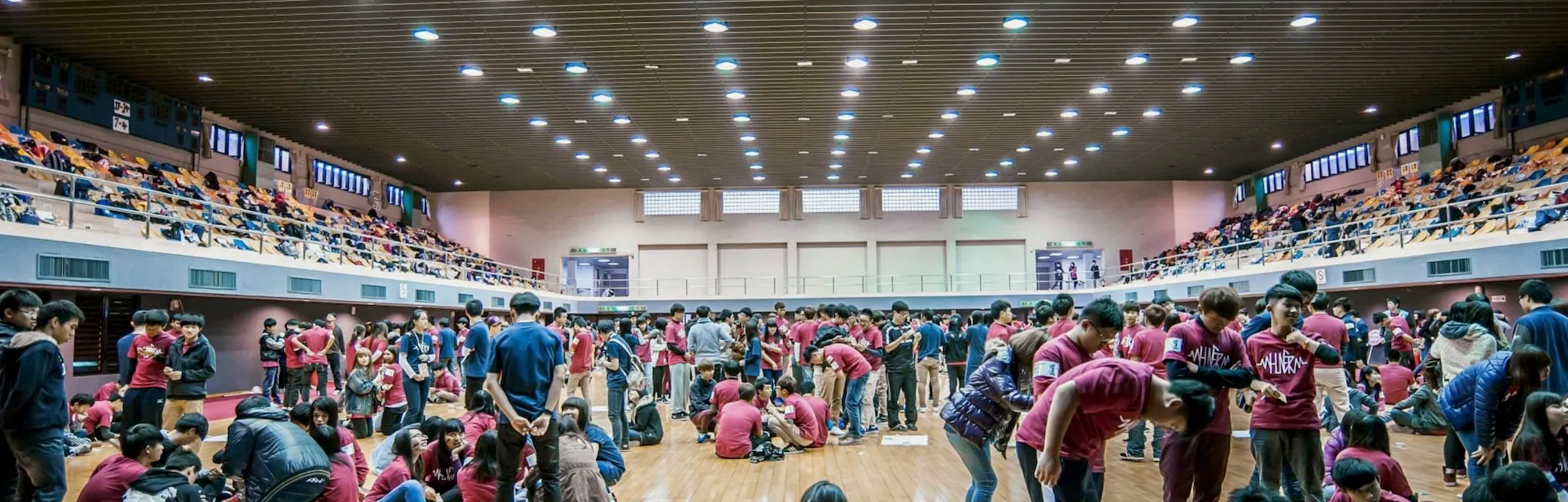
The film was the start of a wider project, Education Bypass Surgery: workshops, a magazine, radio and local hubs that passed questions and people to each other.
How to watch
The film is available as digital copies, on DVD and through libraries. Each option requires sign-up, rental or purchase, and availability differs by country.
Credits
- Directed by
- Adler Yang
- Producer
- Adler Yang
- Produced by
- Awakening (青醒)
- Executive producer
- Wuna Wu (吳汰紝)
- Cinematography
- Adler Yang, Lin Yan-Fu (林彥甫)
- Editing
- Wu Tzu-Ying (吳姿瑩), Kuo Yu-Ning (郭于寧), Chao Chia-Hsien (趙家賢), Adler Yang
- Music
- Shih Min-Chieh (史旻玠), Adler Yang
- Distribution
- Activator (牽猴子)
With a production team of more than ten, many of them teenagers.
How this connects
The centre is this page. Each mark is a page or a person that the site’s records link to it; a line between two marks means those two are linked as well.