演講報告:朝倉景樹〈滴水穿石的力量:民主大學的社會意義〉
本講演記錄朝倉景樹對日本標準人生軌道的批判,以及民主高等教育如何結合自主、共治與相互依存。
- 活動
- 反脆弱的教育新典範:一場從雙E(效益、效率)到雙R(穩健、韌性)的典範轉移 (TIES 2020)
- 日期
- 2020-11-22
- 作者
- 智庫報告(機器草稿,未校閱)
- 原發表處
- Recording on YouTube
- 存檔日期
- 2026-11-22
- 活動
- 反脆弱的教育新典範:一場從雙E(效益、效率)到雙R(穩健、韌性)的典範轉移 (TIES 2020)
- 日期
- 2020-11-22
- 作者
- 智庫報告(機器草稿,未校閱)
- 原發表處
- Recording on YouTube
- 存檔日期
- 2026-11-22
目錄
Introduced by summit curator and session host Adler Yang, Kageki Asakura, founder of Tekisen Democratic University (TDU, formerly Shure University), spoke at Session 2, “Universities as the soil for Resilient and Robust Societies,” during the online 2020 Taiwan International Education Summit on 22 November 2020. In “Transforming the society drop by drop: The Case for Democratic Higher Education,” Asakura argued that Japanese society and its schools pressure people to conform to a standardized course of life, while democratic higher education can enable students to determine how they study, work and live.
The prescribed course of life
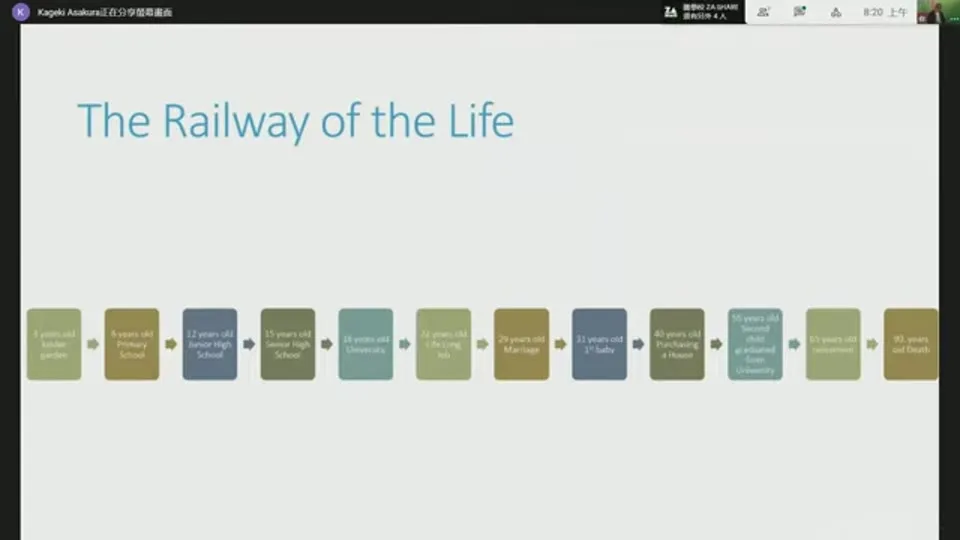
Asakura described Japanese society as being in a difficult condition because people are expected to adapt themselves to society. Schools reinforce this expectation through an unofficial curriculum that teaches children how they should behave and fit into prevailing social arrangements.
He illustrated this process through what is commonly described in Japan as the “railway of life.” On this prescribed route, children enter kindergarten at three and primary school at six; young adults begin work at approximately 22 or 23 and are expected to secure lifelong employment; marriage follows at around 29, and the first child at around 30 or 31. People purchase a house near the age of 40, see their first child graduate from university at approximately 55, retire at 65 and live until around 90.
Asakura identified four principles governing this course: efficiency, punctuality, regulation and harmony. He referred to a Tokyo railway operator that issued an apology over a departure-time discrepancy of [unclear in recording, 0:11:12], adding that trains were expected to operate within five seconds of schedule. Such expectations, he said, cause people to feel guilty when they cannot act within the prescribed time. Society consequently shapes people into a particular form, while people also learn to shape themselves.
This standardization extends to education. Although teaching methods may differ somewhat, private as well as public schools must follow the national curriculum. Asakura therefore characterized Japan as having essentially one type of school, despite the differences among individual children. (0:07:31–0:12:55)
School nonattendance, bullying and hikikomori
When a child does not fit one school, Asakura argued, this often means that the child does not fit the Japanese education system as a whole. Students continually attend to examination marks, and low-scoring students may be treated as though they are bad people. He associated this environment with widespread school violence during the 1970s, 1980s and early 1990s. Schools responded with stricter rules and, particularly during the 1980s, physical punishment. Although violence later decreased, bullying remained unresolved.
Asakura reported that 180,000 primary and junior-high-school students were not attending school, with a higher proportion among junior-high students. Psychiatrists had begun framing school nonattendance as a problem in the 1950s, and it subsequently became a major public issue. From the mid-1980s, a movement of free democratic schools developed; according to Ministry of Education statistics cited by Asakura, Japan had approximately 500 such schools.
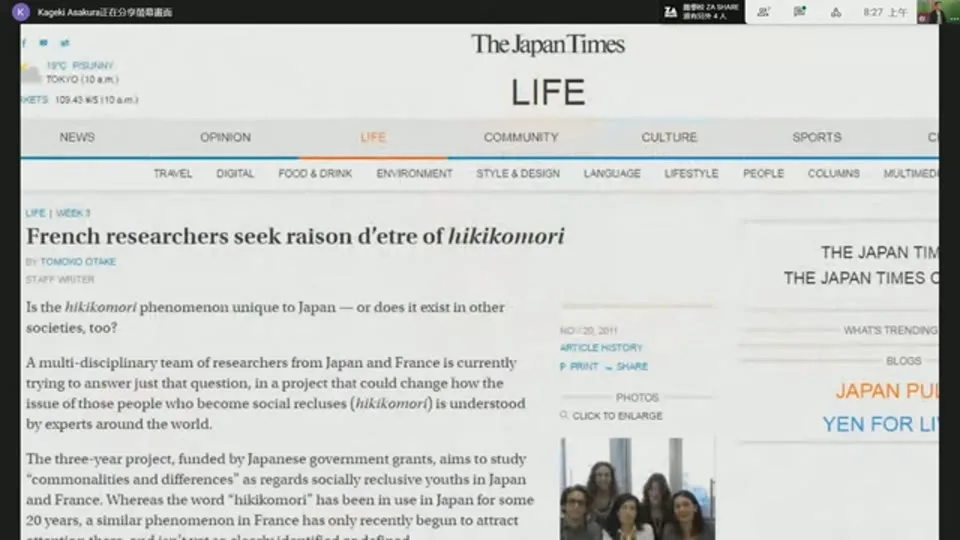
He then discussed a government survey reporting more than one million hikikomori. He defined hikikomori as people who remain mainly at home, although they may occasionally visit a nearby shop, and noted that they span a wide range of ages. He also said that hikikomori was no longer only a Japanese phenomenon.
For Asakura, the reasons people remain at home are central. They may regard themselves as weak, insufficiently mature or otherwise in a bad condition. This self-denial makes them afraid of meeting others and unable to leave home. He presented this problem as one expression of a society organized around strict frames. (0:12:56–0:18:14)
Self-directed education and democratic governance
Asakura explained that TDU seeks another way of living for people who want to escape self-denial and a frame-oriented society. Its education is student-directed: individual students design their own studies, while students collectively exercise autonomy over the university.
At two school meetings each month, students discuss and decide matters including timetables, the academic calendar, staffing and the dates of vacations. There is no compulsory curriculum. Students also determine how long they will remain at the university, rather than following the conventional four-year university structure.
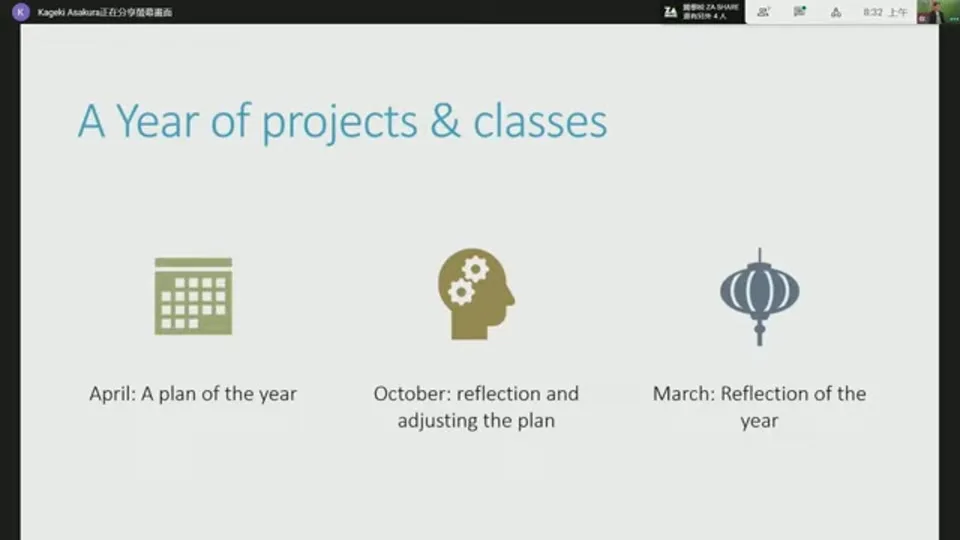
Each April, students prepare individual plans for the coming academic year. Six months later, they reflect on and adjust those plans. At the end of the academic year in March, each student presents the year’s work to the other students and staff. Classes and projects follow a parallel cycle: students bring forward ideas, formulate plans, review them midway through the year and conduct a final discussion about the results.
Students also organize public events to present their activities to society. Asakura mentioned an international film festival in August, an art exhibition and events connected with selfology and performance. (0:18:15–0:22:40)
Graduation and the search for lifelong interests
Graduation at TDU begins when a student believes they understand how they want to live and are ready to proceed in their own way. The student then prepares a one-year graduation plan. At the end of that period, they give an approximately one-hour presentation explaining what they studied and how they intend to live after leaving, followed by roughly one hour of questions and answers.
The audience then responds through the volume of its applause. Strong applause indicates that those present consider it a suitable time for the student to graduate; little or no applause indicates reservations. However, the applause does not determine the outcome. The student listens carefully and makes the final decision, potentially postponing graduation despite strong support or proceeding despite receiving none. Asakura said that students created this practice to combine self-determination with close communication and interdependence.
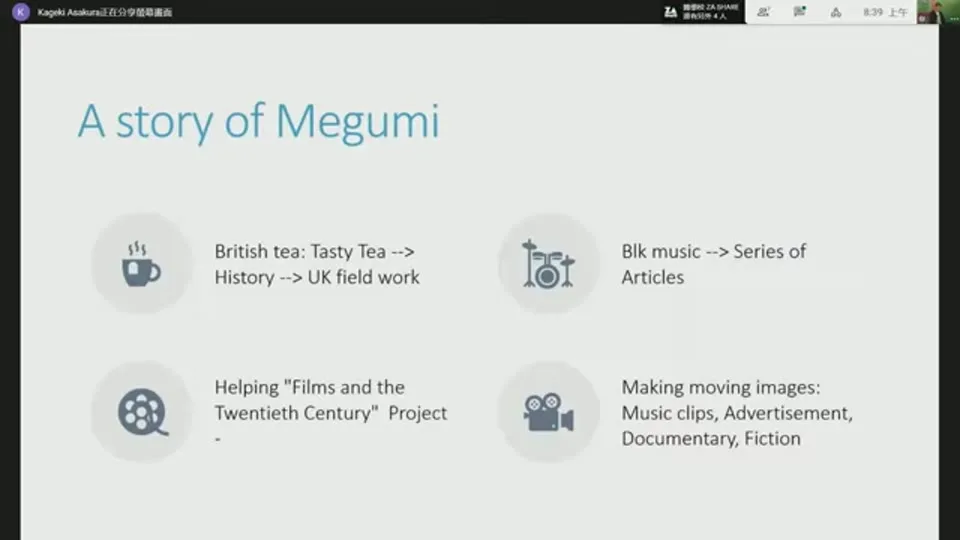
TDU students try different fields in order to identify a lasting personal interest. Asakura described one graduate who studied British tea, visited tea shops and conducted fieldwork in the United Kingdom. Although she enjoyed the research, she concluded that tea was not her central interest. She later turned to filmmaking, produced several films, earned money from the work and entered the field after graduation.
Once students identify an interest, Asakura said, they deepen it through classes and projects and seek related work experience. Areas mentioned included graphic design, video production, website construction and book editing. These activities also create connections with professionals. (0:22:41–0:30:08)
Work, selfology and international connections
Graduates entered nonprofit organizations, companies and other workplaces; some founded social initiatives or became self-employed. Asakura also described TDU’s growing relationship with the Japanese workers’ cooperative movement. One of its largest organizations had 14,000 workers, and a workers’ cooperative and the university were sharing a detached building while developing further collaboration.
Selfology—the study of oneself—was another major part of TDU. Asakura said there was no medicine for the self-denial experienced by many people, particularly those affected by school nonattendance. Selfology instead asked what had happened to a person and who that person was in a deeper sense. TDU offered two popular selfology programmes and held an annual public event on the subject.
Asakura concluded by emphasizing international ties. TDU maintained relationships with people involved in alternative and democratic education in numerous countries. (0:30:09–0:33:26)
Discussion
Yang connected Asakura’s account to the summit’s distinction between effectiveness and efficiency, on one hand, and resilience and robustness on the other. From a network perspective, Yang said, a focus on effectiveness and efficiency often presupposes a centralized structure in which power and authority are concentrated among a small number of agents.
Yang treated the prescribed “railway of life” as a similar centralized arrangement within the individual. When its prescribed centre becomes dysfunctional, he suggested, the person’s wider network of sensations, meanings and emotions may also become dysfunctional, as reflected in hikikomori and school nonattendance.
He contrasted this with TDU practices such as the graduation applause, which he described as reclaiming interdependence and reflexivity while preserving the student’s decision. Yang said that distributed network structures are generally more robust under shocks and more capable of self-organization, adaptation and recovery. (0:33:26–0:35:33)
關聯
中央是本頁。每個記號代表網站紀錄中與本頁相連的頁面或人物;兩個記號之間的線,表示這兩者彼此也有關聯。