Awakening Cooperative Lab · ライブラリー
講演レポート:朝倉景樹「一滴ずつ社会を変える:民主的高等教育を支持する理由」
朝倉景樹が日本の画一的な人生経路を批判し、自己決定と共同運営を結ぶ民主的高等教育を示した講演記録。
機械翻訳・未校閲
- イベント
- 教育における反脆弱性のパラダイムへ:焦点をEE(有効性と効率性)からRR(レジリエンスと頑健性)へ移す (TIES 2020)
- 日時
- 2020-11-22
- 著者
- ラボによるレポート(草稿は機械生成、未校閲)
- 初出
- Recording on YouTube
- 保存日
- 2026-11-22
- イベント
- 教育における反脆弱性のパラダイムへ:焦点をEE(有効性と効率性)からRR(レジリエンスと頑健性)へ移す (TIES 2020)
- 日時
- 2020-11-22
- 著者
- ラボによるレポート(草稿は機械生成、未校閲)
- 初出
- Recording on YouTube
- 保存日
- 2026-11-22
サミットのキュレーター兼セッション司会者である楊逸帆(アドラー・ヨウ)の紹介を受け、雫穿大学(Tekisen Democratic University、TDU、旧シューレ大学)の創設者である朝倉景樹は、2020年11月22日にオンラインで開催された2020年台湾国際教育サミット(TIES、台灣國際教育高峰會)のセッション2「レジリエントでロバストな社会の土壌としての大学」で講演した。「一滴ずつ社会を変革する――民主的高等教育の意義」(原題:Transforming the society drop by drop: The Case for Democratic Higher Education)において、朝倉は、日本社会とその学校が、人々に標準化された人生行路への同調を迫っている一方、民主的な高等教育は、学生がいかに学び、働き、生きるかを自ら決定することを可能にすると論じた。
規定された人生行路
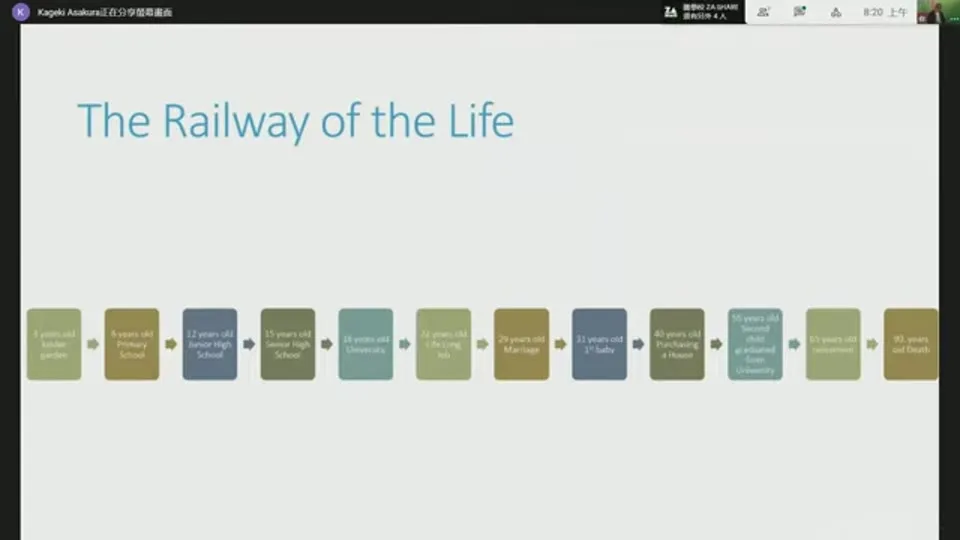
朝倉は、人々が自らを社会に適応させることを期待されているため、日本社会は困難な状況にあると述べた。学校は、子どもたちに、どのように振る舞い、支配的な社会の仕組みにいかに適合すべきかを教える非公式のカリキュラムを通じて、この期待を強化している。
彼はこの過程を、日本で一般に「人生の鉄道」と表現されるものを用いて説明した。この規定された路線では、子どもは3歳で幼稚園、6歳で小学校に入り、若者はおよそ22歳または23歳で働き始め、終身雇用を確保することが期待される。29歳頃に結婚し、30歳または31歳頃に第1子をもうける。40歳頃に家を購入し、およそ55歳で第1子の大学卒業を見届け、65歳で退職し、90歳頃まで生きる。
朝倉は、この行路を支配する4つの原則として、効率性、時間厳守、規律、調和を挙げた。彼は、東京のある鉄道事業者が、発車時刻のずれが[録音不明瞭、0:11:12]であったことについて謝罪した事例に触れ、列車は時刻表から5秒以内のずれで運行することが期待されていると付け加えた。このような期待によって、人々は規定された時間内に行動できないと罪悪感を抱くようになると彼は述べた。その結果、社会は人々を特定の型へと形づくり、人々もまた自らをその型に合わせることを学ぶのである。
この標準化は教育にも及んでいる。教授法には多少の違いがありうるものの、公立学校だけでなく私立学校も国の学習指導要領に従わなければならない。そのため朝倉は、子ども一人ひとりに違いがあるにもかかわらず、日本には実質的に1種類の学校しかないと評した。(0:07:31–0:12:55)
不登校、いじめ、ひきこもり
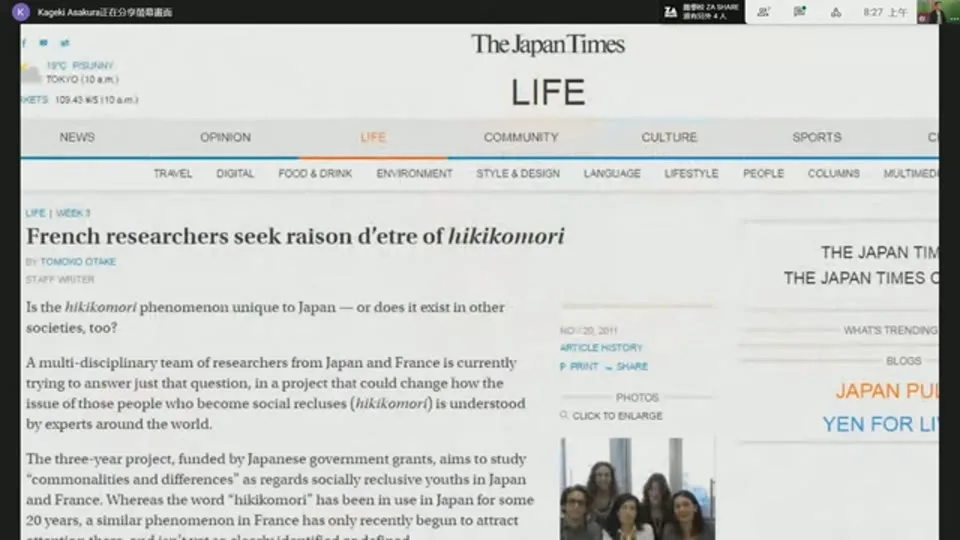
ある子どもが1つの学校に適合しない場合、それはしばしば、その子どもが日本の教育制度全体に適合しないことを意味すると朝倉は論じた。生徒たちは常に試験の点数を気にしており、点数の低い生徒は、まるで悪い人間であるかのように扱われることがある。彼は、この環境を1970年代、1980年代、1990年代初頭に広く見られた校内暴力と関連づけた。学校は、より厳しい規則を設け、とりわけ1980年代には体罰を用いることで対応した。その後、暴力は減少したものの、いじめは未解決のままであった。
朝倉は、180,000人の小中学生が学校に通っておらず、その割合は中学生のほうが高いと報告した。精神科医は1950年代に不登校を問題として捉え始め、その後、不登校は大きな社会問題となった。1980年代半ば以降、自由で民主的な学校をつくる運動が発展した。朝倉が引用した教育部の統計によれば、日本にはそのような学校がおよそ500校存在していた。
続いて彼は、ひきこもりが100万人を超えると報告した政府調査について論じた。彼は、ひきこもりを、時折近隣の店へ出かけることはあっても、主として自宅にとどまる人々と定義し、その年齢層は広範に及ぶと指摘した。また、ひきこもりはもはや日本だけの現象ではないとも述べた。
朝倉にとって、人々が自宅にとどまる理由こそが中心的な問題である。彼らは、自分自身を弱く、十分に成熟していない、あるいは何らかの意味で好ましくない状態にあると考えている場合がある。この自己否定によって、他者と会うことを恐れ、家から出られなくなるのである。彼はこの問題を、厳格な枠組みを中心に編成された社会の一つの現れとして提示した。(0:12:56–0:18:14)
自己主導型教育と民主的な運営
朝倉は、TDUが、自己否定と枠組み志向の社会から逃れたい人々のために、別の生き方を模索していると説明した。その教育は学生主導であり、個々の学生が自らの学びを設計する一方、学生たちは大学全体の運営について集団的に自治を行う。
月に2回開かれる学校会議で、学生たちは、時間割、年間の学事日程、教職員の配置、休暇の日程などについて話し合い、決定する。必修カリキュラムは存在しない。また、従来の4年制大学の構造に従うのではなく、大学に何年間在籍するかについても学生自身が決定する。
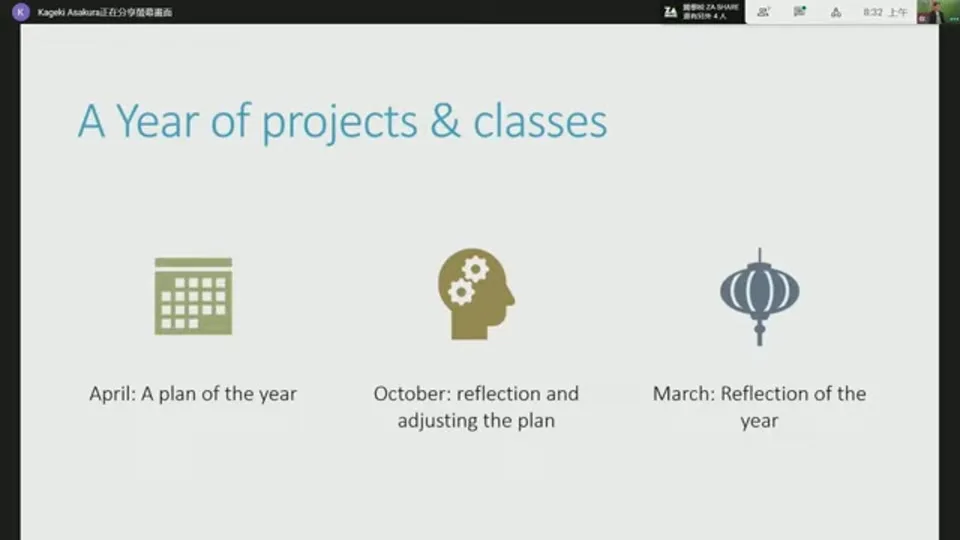
毎年4月、学生たちは新年度に向けて個別の計画を作成する。6か月後には、その計画を振り返り、調整する。3月の年度末には、各学生がその年の成果を他の学生と教職員に発表する。授業やプロジェクトも並行するサイクルに従い、学生がアイデアを提案し、計画を立て、年度の中間時点でそれを見直し、成果について最終的な話し合いを行う。
学生たちはまた、自らの活動を社会に発表する公開イベントを企画する。朝倉は、8月の国際映画祭、美術展、そしてセルフォロジー(selfology)やパフォーマンスに関連するイベントに言及した。(0:18:15–0:22:40)
卒業と、生涯にわたる関心の探求
TDUにおける卒業は、学生が、自分がどのように生きたいのかを理解し、自分自身のやり方で進む準備ができたと考えたときに始まる。その学生は、続いて1年間の卒業計画を作成する。その期間の終わりに、何を学んだのか、大学を離れた後にどのように生きるつもりなのかを説明する、およそ1時間の発表を行い、その後、およそ1時間の質疑応答が続く。
その後、聴衆は拍手の大きさによって応答する。大きな拍手は、その場にいる人々が、その学生にとって卒業にふさわしい時期だと考えていることを示し、拍手が小さい、あるいはまったくない場合は、懸念があることを示す。しかし、拍手が結果を決定するわけではない。学生はそれを注意深く聞き、最終的な決定を自ら下す。強い支持を受けても卒業を延期することもあれば、まったく支持を得られなくても卒業することもありうる。朝倉は、学生たちが、自己決定と緊密なコミュニケーションおよび相互依存を両立させるために、この実践を生み出したと述べた。
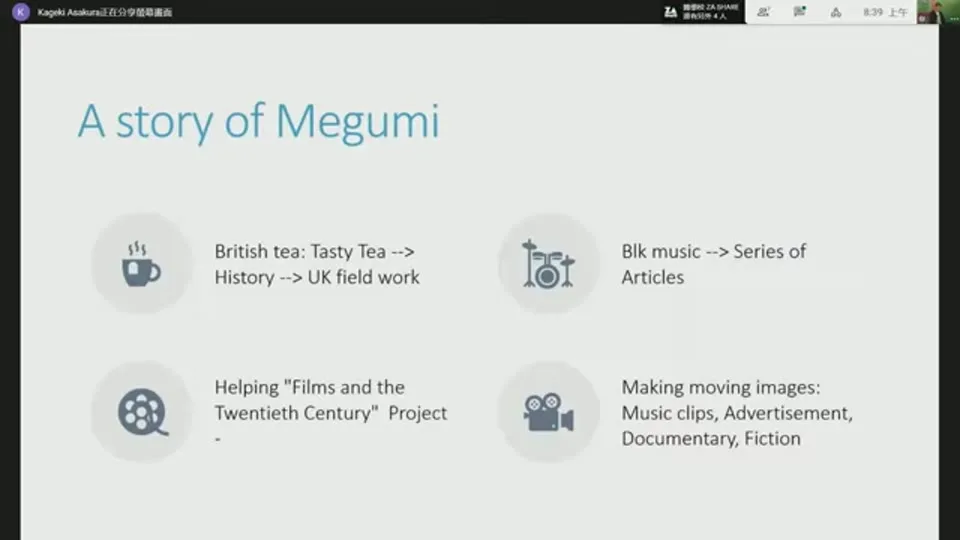
TDUの学生たちは、持続的な個人的関心を見いだすために、さまざまな分野を試す。朝倉は、英国の紅茶を研究し、紅茶店を訪ね、英国でフィールドワークを行った、ある卒業生について語った。彼女はその研究を楽しんだものの、紅茶は自分の中心的な関心ではないと結論づけた。その後、彼女は映画制作に転じ、数本の映画を制作し、その仕事で収入を得て、卒業後にはその分野へ進んだ。
学生たちは関心を見いだすと、授業やプロジェクトを通じてそれを深め、関連する実務経験を求めると朝倉は述べた。言及された分野には、グラフィックデザイン、映像制作、ウェブサイト構築、書籍編集などが含まれていた。これらの活動は、専門家とのつながりも生み出す。(0:22:41–0:30:08)
仕事、セルフォロジー、国際的なつながり
卒業生たちは、非営利団体、企業、その他の職場へ進み、社会的な取り組みを立ち上げたり、自営業者になったりする者もいた。朝倉はまた、TDUと日本の労働者協同組合運動との関係が深まりつつあることについても説明した。その最大規模の団体の1つには14,000人の労働者がおり、ある労働者協同組合と大学は、さらなる協働を発展させながら、1棟の独立した建物を共有していた。
自分自身を研究するセルフォロジーもまた、TDUの主要な活動の一つであった。朝倉は、多くの人々、とりわけ不登校の影響を受けた人々が経験する自己否定には、薬が存在しないと述べた。セルフォロジーはその代わりに、その人に何が起こったのか、そして、より深い意味でその人は誰なのかを問う。TDUは、人気のある2つのセルフォロジー・プログラムを提供し、このテーマに関する公開イベントを毎年開催していた。
朝倉は最後に、国際的なつながりを強調した。TDUは、数多くの国でオルタナティブ教育や民主的教育に携わる人々との関係を維持していた。(0:30:09–0:33:26)
討論
楊は、朝倉の説明を、一方に有効性と効率性、他方にレジリエンスとロバストネスを置く、このサミットの区別と結びつけた。ネットワークの観点から見ると、有効性と効率性を重視することは、権力と権威が少数の行為主体に集中する中央集権的な構造を前提とすることが多いと楊は述べた。
楊は、規定された「人生の鉄道」を、個人の内部における同様の中央集権的な仕組みとして捉えた。その規定された中心が機能不全に陥ると、ひきこもりや不登校に表れているように、その人の感覚、意味、感情からなるより広範なネットワークもまた機能不全に陥りうると彼は示唆した。
彼はこれを、卒業時の拍手のようなTDUの実践と対比し、その実践は、学生自身の決定を保ちながら、相互依存と再帰性を取り戻すものだと述べた。分散型のネットワーク構造は一般に、衝撃に対してよりロバストであり、自己組織化、適応、回復を行う能力がより高いと楊は述べた。(0:33:26–0:35:33)
原文を読む
Introduced by summit curator and session host Adler Yang, Kageki Asakura, founder of Tekisen Democratic University (TDU, formerly Shure University), spoke at Session 2, “Universities as the soil for Resilient and Robust Societies,” during the online 2020 Taiwan International Education Summit on 22 November 2020. In “Transforming the society drop by drop: The Case for Democratic Higher Education,” Asakura argued that Japanese society and its schools pressure people to conform to a standardized course of life, while democratic higher education can enable students to determine how they study, work and live.
The prescribed course of life
Asakura described Japanese society as being in a difficult condition because people are expected to adapt themselves to society. Schools reinforce this expectation through an unofficial curriculum that teaches children how they should behave and fit into prevailing social arrangements.
He illustrated this process through what is commonly described in Japan as the “railway of life.” On this prescribed route, children enter kindergarten at three and primary school at six; young adults begin work at approximately 22 or 23 and are expected to secure lifelong employment; marriage follows at around 29, and the first child at around 30 or 31. People purchase a house near the age of 40, see their first child graduate from university at approximately 55, retire at 65 and live until around 90.
Asakura identified four principles governing this course: efficiency, punctuality, regulation and harmony. He referred to a Tokyo railway operator that issued an apology over a departure-time discrepancy of [unclear in recording, 0:11:12], adding that trains were expected to operate within five seconds of schedule. Such expectations, he said, cause people to feel guilty when they cannot act within the prescribed time. Society consequently shapes people into a particular form, while people also learn to shape themselves.
This standardization extends to education. Although teaching methods may differ somewhat, private as well as public schools must follow the national curriculum. Asakura therefore characterized Japan as having essentially one type of school, despite the differences among individual children. (0:07:31–0:12:55)
School nonattendance, bullying and hikikomori
When a child does not fit one school, Asakura argued, this often means that the child does not fit the Japanese education system as a whole. Students continually attend to examination marks, and low-scoring students may be treated as though they are bad people. He associated this environment with widespread school violence during the 1970s, 1980s and early 1990s. Schools responded with stricter rules and, particularly during the 1980s, physical punishment. Although violence later decreased, bullying remained unresolved.
Asakura reported that 180,000 primary and junior-high-school students were not attending school, with a higher proportion among junior-high students. Psychiatrists had begun framing school nonattendance as a problem in the 1950s, and it subsequently became a major public issue. From the mid-1980s, a movement of free democratic schools developed; according to Ministry of Education statistics cited by Asakura, Japan had approximately 500 such schools.
He then discussed a government survey reporting more than one million hikikomori. He defined hikikomori as people who remain mainly at home, although they may occasionally visit a nearby shop, and noted that they span a wide range of ages. He also said that hikikomori was no longer only a Japanese phenomenon.
For Asakura, the reasons people remain at home are central. They may regard themselves as weak, insufficiently mature or otherwise in a bad condition. This self-denial makes them afraid of meeting others and unable to leave home. He presented this problem as one expression of a society organized around strict frames. (0:12:56–0:18:14)
Self-directed education and democratic governance
Asakura explained that TDU seeks another way of living for people who want to escape self-denial and a frame-oriented society. Its education is student-directed: individual students design their own studies, while students collectively exercise autonomy over the university.
At two school meetings each month, students discuss and decide matters including timetables, the academic calendar, staffing and the dates of vacations. There is no compulsory curriculum. Students also determine how long they will remain at the university, rather than following the conventional four-year university structure.
Each April, students prepare individual plans for the coming academic year. Six months later, they reflect on and adjust those plans. At the end of the academic year in March, each student presents the year’s work to the other students and staff. Classes and projects follow a parallel cycle: students bring forward ideas, formulate plans, review them midway through the year and conduct a final discussion about the results.
Students also organize public events to present their activities to society. Asakura mentioned an international film festival in August, an art exhibition and events connected with selfology and performance. (0:18:15–0:22:40)
Graduation and the search for lifelong interests
Graduation at TDU begins when a student believes they understand how they want to live and are ready to proceed in their own way. The student then prepares a one-year graduation plan. At the end of that period, they give an approximately one-hour presentation explaining what they studied and how they intend to live after leaving, followed by roughly one hour of questions and answers.
The audience then responds through the volume of its applause. Strong applause indicates that those present consider it a suitable time for the student to graduate; little or no applause indicates reservations. However, the applause does not determine the outcome. The student listens carefully and makes the final decision, potentially postponing graduation despite strong support or proceeding despite receiving none. Asakura said that students created this practice to combine self-determination with close communication and interdependence.
TDU students try different fields in order to identify a lasting personal interest. Asakura described one graduate who studied British tea, visited tea shops and conducted fieldwork in the United Kingdom. Although she enjoyed the research, she concluded that tea was not her central interest. She later turned to filmmaking, produced several films, earned money from the work and entered the field after graduation.
Once students identify an interest, Asakura said, they deepen it through classes and projects and seek related work experience. Areas mentioned included graphic design, video production, website construction and book editing. These activities also create connections with professionals. (0:22:41–0:30:08)
Work, selfology and international connections
Graduates entered nonprofit organizations, companies and other workplaces; some founded social initiatives or became self-employed. Asakura also described TDU’s growing relationship with the Japanese workers’ cooperative movement. One of its largest organizations had 14,000 workers, and a workers’ cooperative and the university were sharing a detached building while developing further collaboration.
Selfology—the study of oneself—was another major part of TDU. Asakura said there was no medicine for the self-denial experienced by many people, particularly those affected by school nonattendance. Selfology instead asked what had happened to a person and who that person was in a deeper sense. TDU offered two popular selfology programmes and held an annual public event on the subject.
Asakura concluded by emphasizing international ties. TDU maintained relationships with people involved in alternative and democratic education in numerous countries. (0:30:09–0:33:26)
Discussion
Yang connected Asakura’s account to the summit’s distinction between effectiveness and efficiency, on one hand, and resilience and robustness on the other. From a network perspective, Yang said, a focus on effectiveness and efficiency often presupposes a centralized structure in which power and authority are concentrated among a small number of agents.
Yang treated the prescribed “railway of life” as a similar centralized arrangement within the individual. When its prescribed centre becomes dysfunctional, he suggested, the person’s wider network of sensations, meanings and emotions may also become dysfunctional, as reflected in hikikomori and school nonattendance.
He contrasted this with TDU practices such as the graduation applause, which he described as reclaiming interdependence and reflexivity while preserving the student’s decision. Yang said that distributed network structures are generally more robust under shocks and more capable of self-organization, adaptation and recovery. (0:33:26–0:35:33)
つながり
中央がこのページです。サイトの記録に基づいて、このページとつながりのあるページや人を、それぞれ印で示しています。二つの印を結ぶ線は、それぞれの印が示すページや人の間にもつながりがあることを表します。