Awakening Cooperative Lab · ライブラリー
講演レポート:陳怡光「台湾において民主的手続きを通じ、生徒の学習権と保護者の教育選択権を保障する」(KASpaces 台湾ナショナル・セミナー、2021年)
Yi-Guang (Tim) Chenの講演報告で、民主化と多主体協働が台湾の教育選択を広げた過程をたどる。
機械翻訳・未校閲
- イベント
- 「台湾の教育のDNAを読み解く:進歩と平等はどこに見られるか」(KASpaces 台湾ナショナル・セミナー)
- 日時
- 2021-10-24
- 著者
- ラボによるレポート(草稿は機械生成、未校閲)
- 初出
- The speaker’s recorded talk for the seminar
- 保存日
- 2026-11-22
- イベント
- 「台湾の教育のDNAを読み解く:進歩と平等はどこに見られるか」(KASpaces 台湾ナショナル・セミナー)
- 日時
- 2021-10-24
- 著者
- ラボによるレポート(草稿は機械生成、未校閲)
- 初出
- The speaker’s recorded talk for the seminar
- 保存日
- 2026-11-22
台湾ホームスクール・アドボケーツの創設者であるYi-Guang (Tim) Chenは、2021年10月23–24日にオンラインで開催された「教育における進展と公平性の加速に関するKASpaces全国セミナー」のセッション3において、事前収録された講演を行った。Chenの中心的な主張は、台湾における教育選択肢の拡大は、もっぱら上意下達型の改革によってではなく、学生、保護者、学校、政府の継続的な協働を通じて、民主化と並行して発展したというものであった。
教育の選択と参加
Chenは、台湾、日本、ポーランド、米国に拠点を置く「グローバル・ホームスクール家庭」として、自身の家族を紹介した。家族は2003年以来ホームスクーリングを実践しており、Chen自身は2007年以来、台湾で教育選択権を擁護してきた。また、家庭教育をめぐる国際交流にも参加し、教育政策について台湾政府に助言してきた。
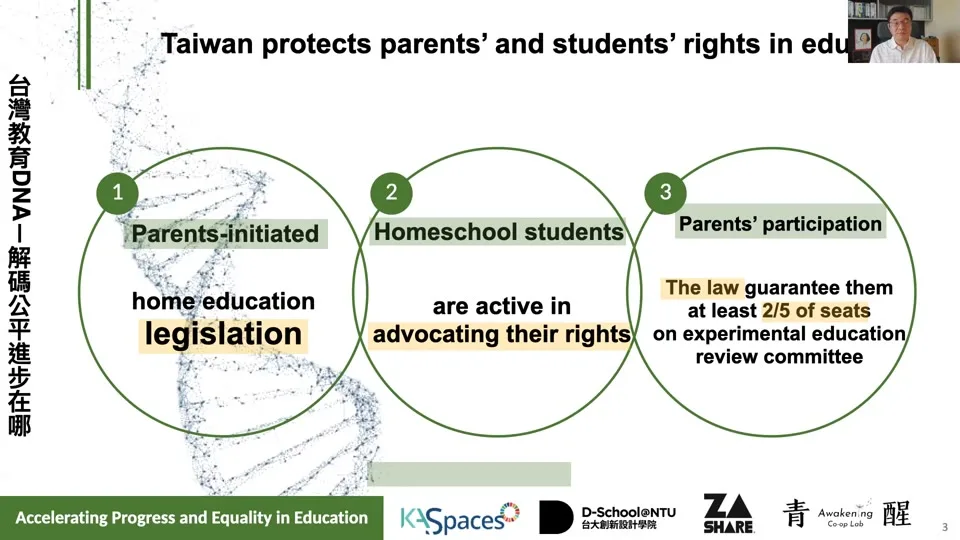
Chenは、台湾の制度に見られるいくつかの際立った特徴を説明した。家庭教育および実験教育に関する改革の多くは保護者が主導した一方、学生も自らの権利を積極的に訴えた。Chenを含む他の委員とともに、6人の学生が国の教育課程審議会の委員を務めた。保護者もまた、実験教育に関する規則の実施を担う審査委員会に参加した。
Chenによれば、ホームスクールで学ぶ学生は学校施設を利用でき、スポーツ、クラブ活動、競技会などの活動にも参加できた。ホームスクールで学ぶ高校生は、年間約€2,000の政府による授業料補助を受給でき、これによって何を学ぶかを選ぶ際の経済的自立性が高まったとChenは述べた。政府による支援には、カウンセリング、評価、教育面および事務面での援助も含まれ、特別なニーズのある学生には追加の支援も用意されていた。高等教育への進学を希望する学生には、特別な入学選考制度が設けられていた。
Chenは、こうした仕組みが一夜にして出現したわけではないと述べた。過去9年間で実験教育に参加する学生が7倍に増加したと報告し、これは保護者と学生の関心の高まりを反映するものであるとした。(0:00:00–0:06:25)
制約された学校教育から地域の実験へ
Chenは、教育選択肢の発展を台湾の政治的民主化の過程に位置づけた。戒厳令は1987年に解除され、独裁体制から民主主義への移行が1990年頃に始まった。同じ時期に、保護者、教育者、学生は、より多くの教育上の選択肢を求めた。
1999年以前には、選択肢は限られていたとChenは述べた。初等教育段階では、公立学校か私立学校のいずれかに通うことができたが、私立学校に在籍する学生は全体の1パーセント未満であった。高校段階で選択できる区分は、公立または私立の職業高校と普通高校であった。高校生の半数以上が職業高校に通い、そのような学校の半数以上は私立であった。私立学校、特に私立の職業高校に通う学生は、公立普通高校の学生よりも多くの費用を負担した。
公立と私立の区別があるにもかかわらず、学校が何を教えるかは国の教育課程によって厳格に規制されていた。Chenは、そのため学生には、教育や学習に関する実質的な選択肢がほとんど残されていなかったと論じた。学校は、政府によって設立されるか、あるいは政府とつながりを持つ資産豊かな創設者による財団によって設立されており、そこでは教育が市民を統制するために利用されていた。
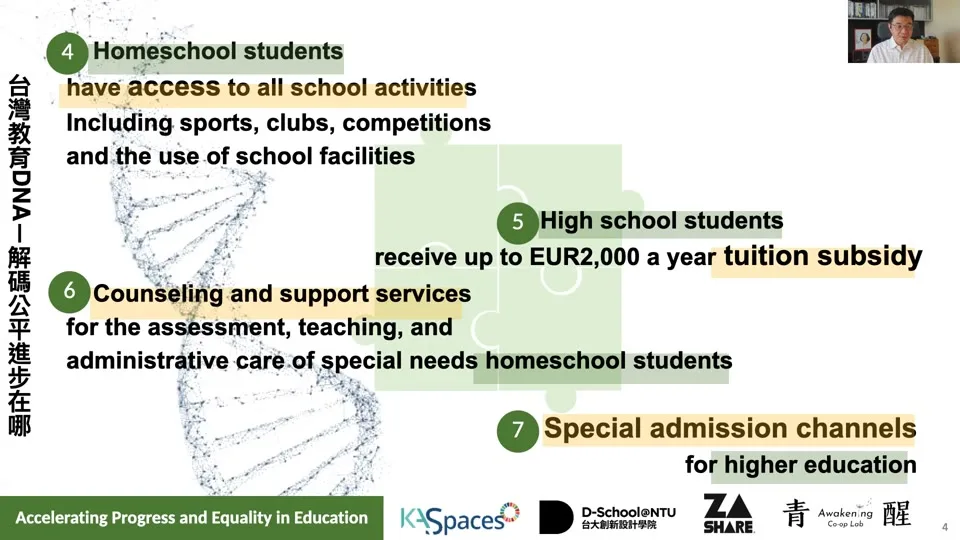
変化はまず、地域の取り組みを通じて現れた。一部の地方政府は、ホームスクーリングや小規模なオルタナティブ学習グループを含む「非学校型教育」を認め始めた。個々の保護者は、子どもを学校に通わせないための申請を行うことができ、NGOは、従来型の学校教育を望まない学生のために小規模な学習グループを設立することができた。また地方政府は、民間組織による公立学校の運営も試行しており、Chenはこれを米国のチャータースクールや英国のアカデミーになぞらえた。
当初、こうした仕組みには国レベルの法的根拠がなかった。したがって、教育の自由は管轄区域によって異なり、台北の家庭が利用できる選択肢を、他の地域の家庭は利用できないこともあった。Chenは、ホームスクールを実践する保護者として5年間を過ごした後、自分の家族が行使してきた選択肢を他の家庭にも広げようと、2007年に権利擁護活動に携わるようになった。(0:06:25–0:10:25)
国レベルの規制と実験教育法
2014年以前、国レベルの改革は段階的な変更を通じて進められた。政府は、地方政府ごとに異なっていた実験教育の規則を統一するための共通規則を導入したが、これらの規則はまだ議会で法律として制定されてはいなかった。その成果の一つとして、2011年から高校段階でのホームスクーリングが可能になった。
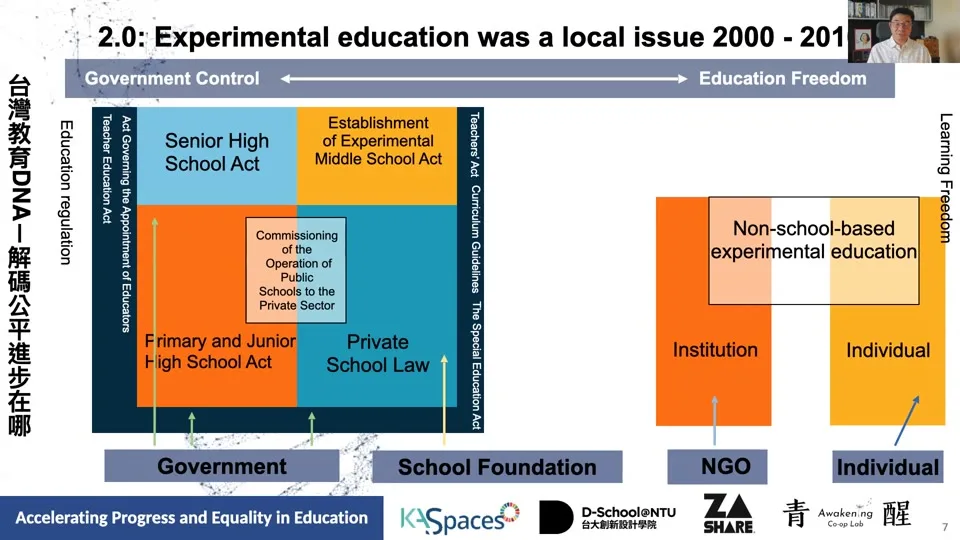
Chenは、非学校型教育を3つの形態に区分した。個人申請では、保護者が自分の子どもを教育することが認められた。団体申請では、最大30人の学生の保護者が共通の教育課程を用いることが認められ、これは米国のホームスクール協同組合に類似していた。機関申請では、NGOが特定の理念に基づく教育実験を実施することが認められた。Chenによれば、こうした仕組みのもとで参加者は増加した一方、後期中等学校内部での実験は限定的であり、主に教育課程に集中していた。
政権交代によって行政規則が変更される可能性を懸念した擁護者たちは、より強固な法的保護を求めた。議会は2014年冬に法律を可決し、2015年には3つの実験教育法が施行された。これらは、非学校型教育、学校型実験教育、公立学校の民間運営を対象とするものであった。学校型実験教育によって、公立学校と私立学校は従来の規制の一部から離れることが可能になり、新たな枠組みによって、公設民営学校を全国で設置できるようになった。
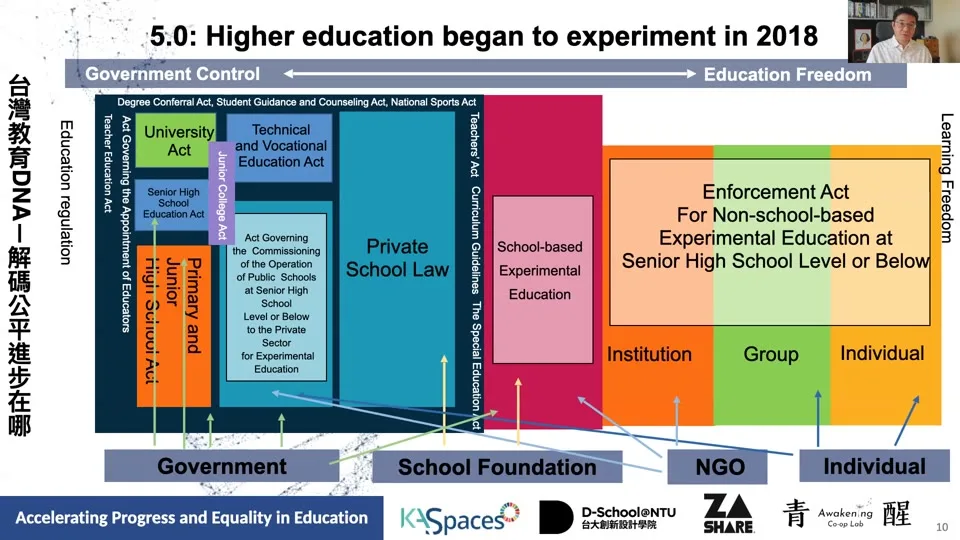
3年後、立法府はこれらの法律を改正した。Chenによれば、改正は個人および非学校型教育で学ぶ者への保護を強化し、学校型実験教育を高等教育へと拡大した。Chenは、台湾の大学が依然として厳しく規制されており、2018年になっても、主として教育課程に関して、実験を行う余地は限られていたと強調した。(0:10:31–0:15:51)
学習者の自律性に向けて
Chenは、学習者の自律性を次の主要な方向性として挙げた。この展開を2019年に導入された国の教育課程と関連づけ、そのもとでは、すべての高校生が週に少なくとも1時間、自主学習または自己主導型学習を行わなければならないと説明した。したがって学生は、自分が何を学ぶかを自ら決めなければならず、その一方で教育の仕組みは指示的な性格を弱めていった。
Chenは、この動きを、学習者がより大きな自立性と責任を担う「自己決定学習(heutagogy)」への移行と表現した。2018年以来、一部の大学は、選抜された学生が自ら学位課程と教育課程を設計することを認め始めていた。
またChenは、自己決定学習の原則に基づく実験大学を2022年に運営するため、自身と協力者たちが認可を申請していると述べた。学生は自らの教育課程を設計し、何を学びたいかを大学側に伝えることになり、大学の役割は、学生がその計画を実現できるよう支援することであった。Chenは、このアプローチがその後10年間で、他の教育段階にも広がると予想した。(0:15:51–0:17:59)
民主的協働と教育を受ける権利
結びに、Chenは、台湾における教育および実験教育の選択肢の発展を、複数のステークホルダーが関与する過程として位置づけた。それは、特定の政府や官僚によって押しつけられた取り組みでもなければ、単なる下からの革命でもなかった。学生、保護者、学校、政府が協働し、実験教育を規律する規則を確立したのである。
Chenは、このアプローチを、科目、ビデオゲームで遊ぶ時間、放課後の授業への制限を含め、中国政府が教育を細部に至るまで管理するあり方と対比した。続いてChenは、台湾の実験教育の枠組みを、権利に関する国際的原則のなかに位置づけた。それは、子どもに与えられる教育を選択するうえで保護者に優先的な権利があることを認めており、世界人権宣言に適合していると述べた。また、児童の権利に関する条約にも言及し、子どもが教育を受ける権利と、教育を選択する権利を強調した。(0:17:59–0:20:14)
原文を読む
Yi-Guang (Tim) Chen, founder of Taiwan Homeschool Advocates, delivered a pre-recorded talk during Session 3 of the KASpaces National Seminar on Accelerating Progress and Equity in Education, held online on 23–24 October 2021. Chen’s central claim was that Taiwan’s expansion of educational choice developed alongside democratization through sustained cooperation among students, parents, schools, and government, rather than through a solely top-down reform.
Educational choice and participation
Chen introduced his family as a “global homeschool family” based across Taiwan, Japan, Poland, and the USA. His family had homeschooled since 2003, while he had advocated for educational choice in Taiwan since 2007. He had also participated in international home-education exchanges and advised the Taiwanese government on education policy.
He described several distinctive features of Taiwan’s system. Many reforms concerning home education and experimental education were parent-led, while students actively advocated for their own rights. Six students served on the national curriculum board alongside other members, including Chen. Parents also participated in the review committees responsible for implementing experimental-education rules.
According to Chen, homeschooled students could use school facilities and participate in activities including sports, clubs, and competitions. Homeschooled high-school students could receive government tuition subsidies of about €2,000 per year, which he said gave them greater financial independence in choosing what to study. Government support also included counselling, assessment, teaching and administrative assistance, with additional provision for students with special needs. Special admissions channels were available for students seeking to enter higher education.
Chen said these arrangements had not appeared overnight. He reported a sevenfold increase in student participation in experimental education over the preceding nine years, reflecting growing interest among parents and students. (0:00:00–0:06:25)
From restricted schooling to local experiments
Chen placed the development of educational choice within Taiwan’s political democratization. Martial law was lifted in 1987, and the transition from dictatorship toward democracy began around 1990. During the same period, parents, educators, and students sought more educational options.
Before 1999, he said, choices were limited. At the primary level, students could attend either a public or private school, but private schools enrolled less than 1 percent of students. At the high-school level, the available categories were public or private vocational and regular high schools. More than half of high-school students attended vocational schools, and more than half of those schools were privately operated. Students in private schools, particularly vocational schools, paid more than those in public regular high schools.
Despite the public-private distinction, the national curriculum tightly regulated what schools taught. Chen argued that this left students with little meaningful choice concerning education or learning. Schools were established either by government or by foundations whose well-endowed founders had government connections, within a system in which education had been used to control citizens.
Change first appeared through local initiatives. Some local governments began allowing “non-school-based education,” including homeschooling and small alternative learning groups. Individual parents could apply for children not to attend school, while NGOs could establish small learning groups for students who did not want conventional schooling. Local governments also experimented with allowing private organizations to operate public schools, which Chen compared to charter schools and UK academies.
These arrangements initially lacked national legislation. Educational freedom therefore depended on jurisdiction: a family in Taipei might have access to options unavailable elsewhere. Chen became involved in advocacy in 2007 after five years as a homeschooling parent, seeking to extend to other families the choices his own family had exercised. (0:06:25–0:10:25)
National regulation and experimental-education laws
Before 2014, national reform proceeded through incremental changes. The government introduced common regulations intended to harmonize the differing experimental-education rules used by local governments, although these regulations had not yet been enacted by parliament. One result was that high-school homeschooling became possible from 2011.
Chen distinguished three forms of non-school-based education. An individual application allowed parents to educate their own children. A group application allowed parents of up to 30 students to use a common curriculum, resembling a US homeschooling cooperative. An institutional application allowed an NGO to conduct an educational experiment based on a particular philosophy. He said participation grew under these arrangements, while experimentation within senior high schools remained limited and concentrated mainly on curriculum.
Concerned that administrative regulations could change with a change of government, advocates sought stronger legislative protection. Parliament passed legislation in the winter of 2014, and three experimental-education laws took effect in 2015. These covered non-school-based education, school-based experimental education, and the private operation of public schools. School-based experimentation allowed public and private schools to depart from some conventional regulations, while the new framework made privately operated public schools possible nationwide.
Three years later, the legislature revised the laws. Chen said the amendments strengthened protections for individuals and non-school-based learners and extended school-based experimentation into higher education. He emphasized that Taiwanese universities remained heavily regulated and, even by 2018, had only limited room to experiment, principally with curriculum. (0:10:31–0:15:51)
Toward learner autonomy
Chen identified learner autonomy as the next major direction. He connected this development to the national curriculum introduced in 2019, under which every high-school student had to complete at least one hour per week of independent or self-directed study. Students therefore had to decide what they would learn, while educational structures became less directive.
He described this movement as a shift toward “heutagogy,” in which learners assume greater independence and responsibility. Since 2018, some universities had begun allowing selected students to design their own degrees and curricula.
Chen also said that he and his partners were applying for a licence to operate an experimental university in 2022 based on heutagogical principles. Students would design their own curricula and tell the institution what they wanted to learn; the institution’s role would be to help them realize those plans. He expected this approach to spread through other levels of education over the following ten years. (0:15:51–0:17:59)
Democratic cooperation and educational rights
In closing, Chen characterized Taiwan’s development of educational and experimental choice as a multi-stakeholder process. It was neither an initiative imposed by a particular government or bureaucrat nor simply a bottom-up revolution. Students, parents, schools, and government worked together to establish rules governing experimental education.
He contrasted this approach with government micromanagement of education in China, including restrictions on subjects, time spent playing video games, and after-school classes. He then situated Taiwan’s experimental-education framework within international rights principles. He said it complied with the Universal Declaration of Human Rights by recognizing parents’ priority in choosing the education provided to their children. He also referred to the Convention on the Rights of the Child, emphasizing children’s right to education and to educational choice. (0:17:59–0:20:14)
つながり
中央がこのページです。サイトの記録に基づいて、このページとつながりのあるページや人を、それぞれ印で示しています。二つの印を結ぶ線は、それぞれの印が示すページや人の間にもつながりがあることを表します。