在流行的系統變革陰影之下:一所名校如何辜負一位弱勢學生,或論批判實在論取向的行動者本位取徑
透過化名學生Wen的故事(離開學校後如魚得水,進入高選擇性大學後被消耗殆盡),本文主張流行的系統變革取徑可能重建封閉的機械式系統,並提出批判實在論取向的行動者本位取徑。
- 日期
- 2024-07-17
- 作者
- 楊逸帆
- 原發表處
- Illuminate Network (Medium)
- 存檔日期
- 2026-11-22
- 日期
- 2024-07-17
- 作者
- 楊逸帆
- 原發表處
- Illuminate Network (Medium)
- 存檔日期
- 2026-11-22
目錄
- An “accidental freedom” from school…
- …and an “unexpected fall” after her return
- “Getting poor kids into (good) universities” — an evidenced-based leverage point?
- A mechanism that stifled Wen: Allocation Dependence
- A mechanism that empowered Wen: Learning by Caring
- Wen’s story revisited: The impacts of Learning by Caring and Allocation Dependence
- Sophisticated systems “models,” disappearing systems “thinking”: Positivistic reproduction of mechanistic closed systems
- Critical Realism-informed Agent-Based Approach: Changing the rules we live by to “be the change”
- References
An “accidental freedom” from school…
Without university, Wen* (This is a pseudonym, and some personal information are changed to protect the individual’s privacy) used to thrive as a professional. However, entering university dragged her back to the brink of a poverty trap.
Raised in a single-parent, low-income family, Wen has always been diligent and considerate. She studied hard enough to enter one of the better high schools in her city and kept getting good grades under high competition and pressure. However, everything changed when her grandfather got into an accident and she left high school to become his caregiver.
Leaving school due to family financial difficulties may sound like a recipe for teen pregnancy, drugs, and crime, but the opposite was true for Wen. She found learning more effective and relevant when she was fully in charge. Besides taking care of her grandfather, her compassion for children made her stand out from other university students at selective universities and got her accepted for a paid tutoring job offer.
She enjoyed her “self-directed education,” her job, self-actualization, autonomy, and flexibility in her new lifestyle. Despite the physical burden, caring for her grandfather wasn’t merely draining but was also fulfilling. Her bond with her grandfather is deep, and she enjoyed chatting with him.
But as time went by, the question of her future lurked. Her mother wanted her to return to school and get into university, even if it would be a substantial financial burden to the family.
Wen faced a dilemma. She found that learning independently was way more cost-effective than returning to school, and she wasn’t sure what she would study at university yet. She didn’t want to bring such a substantial financial burden to her mother for nothing. But at the same time, she didn’t want to make her mother worry; she was also concerned that the decision not to attend university might significantly impact her life negatively.
Wen brought her dilemma to the Awakening Cooperative Lab and explored it through our pilot project on “Reflexive Media” (Yang and Pi, 2012; Yang, 2020). The project is based on a model in which the audience-learners crowdsource the issues they want to cover and then engage in shared inquiry together. In this approach, media content becomes a product of intersubjective and reflexive learning instead of single-directional “feeding” of information –the standard spoon-feeding model of education (Figure 1).
At the time, the project’s focal issue was the relationship between higher education and employment. By joining interviews with job market professionals, learning about the oversupply of university-level jobseekers; interviewing professionals without university degrees, learning from their own experiences of (self-)education at workplaces; and studying the phenomenon of “overeducation” and “underemployment,” Wen found herself wanting to explore her passion for education further at the workplace before attending university. She brought a copy of Awakening Magazine — which summarized the output of their collective inquiry — to her mother. Reassured by the thorough study that Wen had participated in, her mom approved Wen to go directly to work (Figure 2.1. and 2.2.).
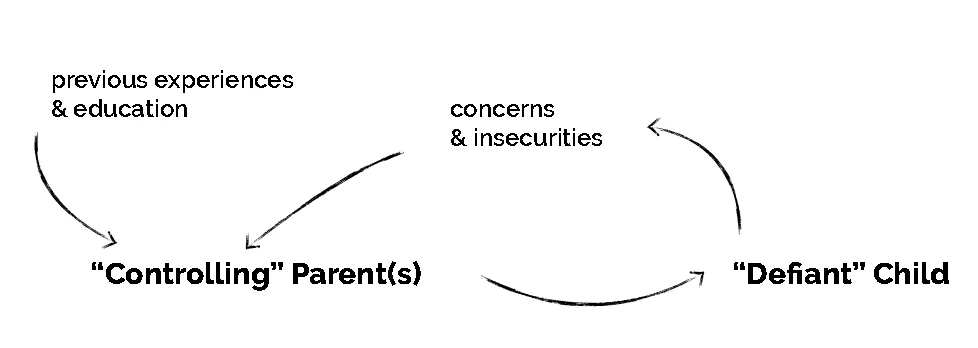
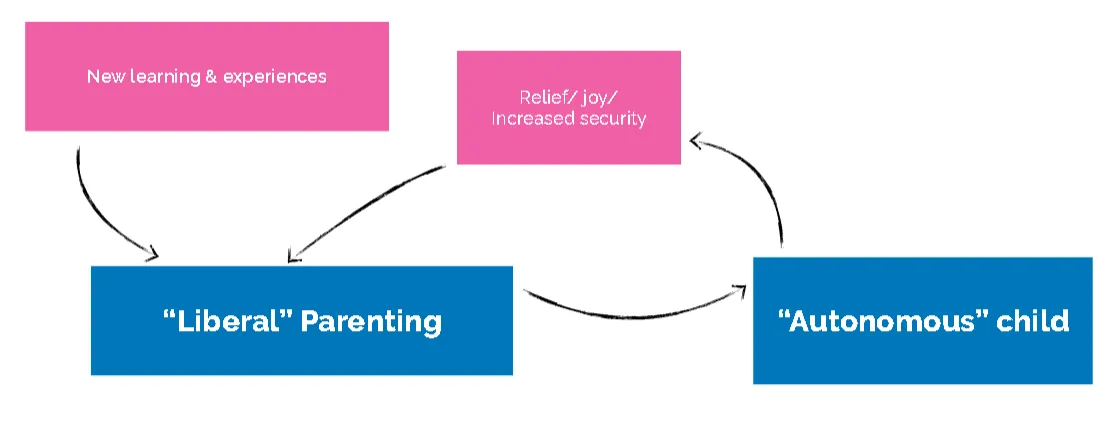
Starting as an afterschool program teacher, Wen’s passion, hard work, and attentiveness to the child as a whole person, rather than just academic performance, quickly got her promoted to the leadership level at the afterschool program. Shortly after, her reputation at work got her an invitation to join as a founding member of an alternative school. At the same time, her story became an encouragement to many. She began receiving public speaking invitations and was ultimately awarded the Presidential Education Award for her contribution to education.
…and an “unexpected fall” after her return
After years of exploration through practice, she became certain that she wanted to pursue education and believed that, in the long run, to become a credible educator (especially given the social norms of becoming so), getting a higher degree would still be better.
Her portfolio got her accepted into one of Taiwan’s most selective universities without any entrance exams. Given her socioeconomic background and the gap between her high school and university’s selectivity, returning to her community high school and applying through the traditional exam route would have been nearly impossible.
Getting into a “prestigious” university as a disadvantaged yet high-achieving youth may sound like a guarantee for successful upward mobility. However, Wen’s life, like the lives of many students worldwide, defied common conception. Her university life was packed with irrelevant (e.g., outdated compared to her years of pioneering practice) courses just to meet the graduation requirements, with few exceptions. To keep receiving merit-based scholarships, a considerable portion of her afterschool time had to be spent on academics so that her grades and class ranking wouldn’t fall behind, especially since her university was one of the most competitive in the country. However, besides university, she still needed a job to support herself and her family financially. Given the heavy school workload, she couldn’t continue her full-time alternative school job in another city; she only took highly replaceable and repetitive part-time assistant jobs that didn’t just pay poorly but also weren’t positions in which her abilities and personality could truly bring value. A lower wage means more work hours to meet her financial needs, yet her university requirements imposed a tight cap on her work hours. Ironically, while she entered university to pursue her passion for education better, it turned out to be anything but that. She was physically and mentally exhausted by the way of life that the university imposed on her without any room to further the professional development of her passion — learner-centered, holistic education.
Wen had to reduce her credit load each semester to work enough hours to meet her personal and family financial needs. Extracurricular or spontaneous student activities — another crucial asset supposed to be provided by university life — were never in the picture due to her limited time and energy. Yet, the income from the extended working hours was still way below the level of a full-time job. Overworking for both her academics and part-time job undermined her health, and the delayed graduation due to insufficient credits worsened this toxic situation by prolonging it. Ultimately, her health broke down after years of burnout. She couldn’t attend university anymore. At the same time, given her health situation, she had to earn more with fewer working hours, meaning returning to work in alternative education wasn’t feasible.
Without many options, she left education altogether.
She changed her profession — She became an aromatherapist and beautician for income and time for self-care.
“Getting poor kids into (good) universities” — an evidenced-based leverage point?
Confronting the mainstream, “science/evidence-based,” and “systematic approach” to poverty reduction (e.g., see Banerjee and Duflo, 2012), which stresses the importance of (higher) education as a necessity for upward mobility and the betterment of society, Wen’s story might sound like an anomaly. However, if we closely examine this rationale and Wen’s story, we will find that the reality of learning, education, social mobility, and inequality is always more nuanced than the seemingly objective numbers.
For simplicity, we can summarize the assumptions underlying the view of “higher education as a key solution to poverty” or “getting poor kids into (good) universities” with the following positive feedback loop (Figure 3).
- More or better schooling
- builds more or better skills and knowledge, improves decision-making (associated with the human capital view; See: Becker, 1994; Mincer, 1974; Schultz, 1961),
- accumulates more or better cultural, social, and symbolic capital (associated with the social and cultural reproduction view; See: Bourdieu, 1979; 1989; 2018),
- and signifies higher desirability as an employee (associated with the signaling view ; See: Arrow, 1973; Spence, 1973; Stiglitz, 1975).
- These all contribute to access to more advanced career options or life opportunities, which are assumed to be associated with more significant income.
- A higher income allows one to afford more or better schooling for oneself or one’s offspring, reinforcing the feedback loop.
- Granting disadvantaged youth a “good education” (e.g., enrollment at and financial support for attending a “good” university) seeks to break away from the youth’s limiting socioeconomic background, giving them an equal starting point to enter such a positive cycle with their effort (e.g., see Banerjee and Duflo, 2012).
However, the paper or digital copy of one’s diploma in itself isn’t very useful. While school attainment***** (This is often called “educational attainment.” However, following Illich’s (1971) argument that “more years in school” or “completing studies at more advanced levels of schools” isn’t necessarily equal to “more education,” I choose to use “school attainment” instead) is a useful concept for understanding this causal relation, it is evident that neither the capability, different forms of capital, nor the desirability as an employee can be reduced to the effects of obtaining that piece of diploma. These assumed benefits are the results of many other major factors, including but not limited to how time is spent during the years of schooling, the supply and demand of talent under the society’s economic structure, or regulations on income, taxes, and so on, which, although playing significant roles in this picture, are still subject to the webs of causation as a feature of open systems. For example, influenced by an oversupply of talent, university graduates in Taiwan face the lowest job opportunities at their school attainment level and the highest unemployment rate compared to people with lower school attainments (Directorate General of Budget, Accounting and Statistics, 2024; Yang 2021a).
A mechanism that stifled Wen: Allocation Dependence
To make sense of Wen’s story further, two concepts, or understanding two systemic mechanisms, are crucial.
The first is Allocation Dependence (Yang 2021a; 2023a; 2023b). It describes the mechanism at play when agents are dependent on allocated resources, thereby focusing on redeeming such resources by their “monetized qualities” after a process that assimilates and trims off their qualities mainly to fit into the allocation measures (e.g., criteria, means, processes) rather than the intrinsic value or meaning of doing so. In other words, when a person is allocation-dependent, they focus on changing themself in a transactional manner, under the assumption that the better/more they fit in the allocation measures, the better/more resources they can get from the resource allocation process or system.
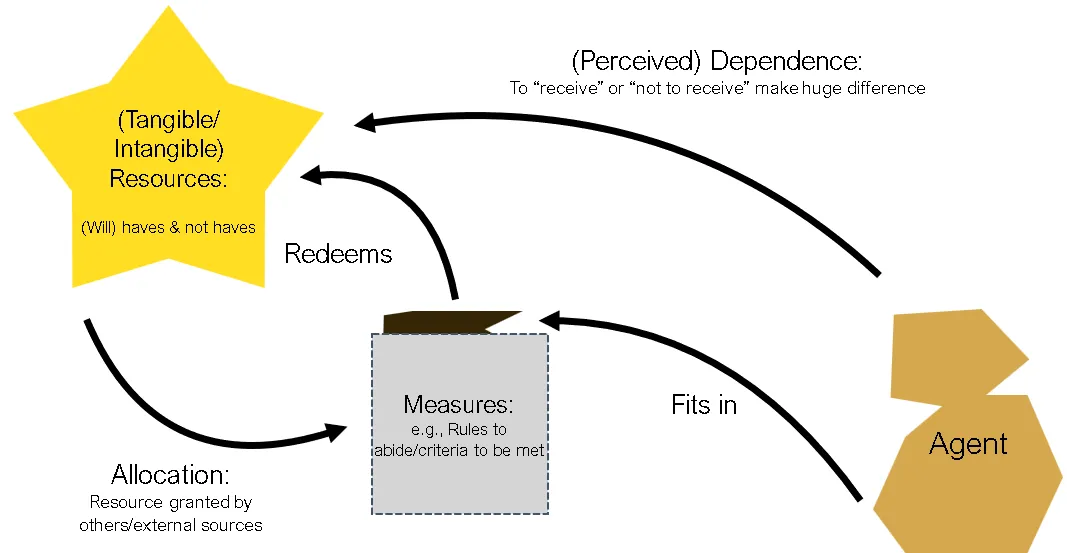
In the context of education, this mechanism is often observable when students (although not unusually forced by their parents or teachers) are dependent on resource allocation by educational institutions (e.g., schools, universities, and the tracking/accountability/etc. systems that weave them together), such as the opportunity to increase one’s capability and different forms of capital: Before the next stage of schooling, students have to equip themselves with what gives them an edge to get into a “good” school/university and may have to let go of some activities, passions, or traits that might get in the way. Similarly, to receive resources such as grades, certificates, scholarships, eligibility for specific programs, or the diploma, students must meet the prerequisites, which, given that time and energy are limited, is often at the cost of developing themselves in other directions.
Entailed in this mechanism are many emergent problems. I’ll only mention a few here:
- Given every individual’s distinct characteristics (e.g., backgrounds, traits, dispositions), when put under a common set of measures, there will always be some who fit the measures better than others. In other words, this mechanism already involves inequality (Figure 4.2.).
- At the same time, as the focus and effort are directed toward “meeting” the allocation measures to “redeem” resources, the allocation-dependent agent ceases to “regenerate” resources but only “ exchange ” (often in some form of competition) for an assumingly existing and functional pool of resources (Figure 4.3.).
- However, hard work doesn’t guarantee a good fit with the allocation measure; a good fit with the allocation measure doesn’t necessarily guarantee the successful redemption of resources (e.g., because of other “equally good fits”); the successful redemption of resources doesn’t guarantee the resources’ utility or value given the agent’s context (e.g., a higher degree doesn’t necessarily bring better career opportunities since the society/economic structures are also changing) — in other words, falling into this mechanism increases the fragility of the agent, as any section of the chain of contingencies such as the above fails to work, the entire system also fails to work (Figure 4.4.).
We can picture a world where all people are allocation-dependent:
- Institutions exploit resources and allocate them to people;
- People change themselves (at times in alienating ways) to compete for resources, then they occupy the allocated resources, consume them, and waste the unused resources;
- People who fail the competition are left behind with minimal or no resources, often disempowered;
- Any unexpected failure in the chain of contingencies harms real lives; and
- Since most people are solely focused on getting resources and the regeneration of resources is not an embedded necessity of life, the speed of exhaustion greatly exceeds the regeneration of resources.
A mechanism that empowered Wen: Learning by Caring
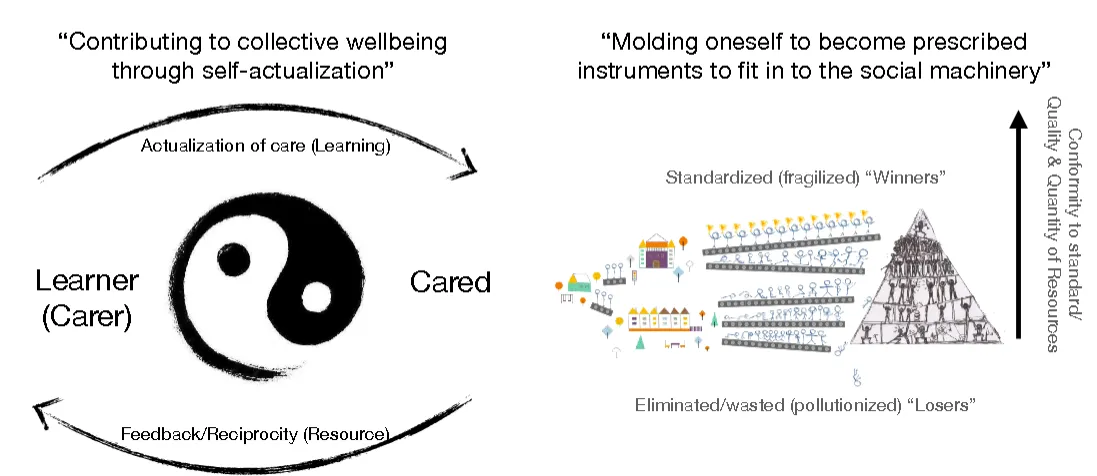
Learning by Caring, the second mechanism, is an educational approach that can alleviate or mitigate one’s allocation dependence — at least in the context of education/learning and social relations. In comparison but not against the existing two ideal paradigms of education — Learning by Reasoning (e.g., critical thinking, liberal arts) and Learning by Doing (e.g., hands-on/experiential learning, project-based learning, vocational education), Learning by Caring is inclusive of both but additionally addresses the question of educational resources by tapping into the power of reciprocity as a social form of regeneration — Instead of mere consumption and exhaustion of resources after being allocated, resources or values are regenerated when reciprocated.
Learning by Caring happens when one cares about something(s) and tries to attend to the cared (e.g., a thing, an issue or cause, a person, etc.). By attending to the cared, the learner is deliberately or consciously, reflexively, and adaptively broadening and deepening their awareness of themselves and the cared thing(s). Hence, they become able to respond to both. This involves but also goes beyond both Learning by Reasoning and Doing. Such holistic engagement with the cared and themself in itself is already a process of and a resource for building the learner’s capacity. In contrast to the typical learning directed and appraised by prescribed goals/content, which inevitably makes some learners get ahead and leaves others behind, in Learning by Caring, every learner’s distinct background, aptitude, experiences, etc., become their unique asset — even if everyone has different starting points. Since they’re each pursuing their unique pathways of caring, nobody is ahead or left behind — they all, equally, move forward from where they are.
Additionally, as caring is a socially embedded activity, the learner will also interact with people involved with the cared or who share related concerns. The responses from these people, whether positive or negative, friendly or unfriendly, material or nonmaterial, are also already resources for the learner’s further learning, as such feedback is a source for the learner’s adaptation or growth in different areas. At the same time, interactions with people provide the conditions for building “relevant” social capital and cultural capital — i.e., by building connections, familiarity, trust, etc., and embodiment of cultural norms in a community relevant to the learner’s further development and career. While it is important to note that Learning by Caring per se doesn’t guarantee future income or financial sustainability, as contributions or value created to others and society often aren’t fairly represented in monetary terms* (As economist Ha-Joon Chang (2022) said , the “key/essential workers” whose utmost importance for our survival was recognized under the impact of the COVID-19 pandemic, ironically get paid almost the least under the so-called “free market economy”), money or employment are still possible means for others to reciprocate the learner’s care. In this scenario, Learning by Caring also increases learners’ financial capacity to further their learning.
Wen’s story revisited: The impacts of Learning by Caring and Allocation Dependence
Let’s try to recontextualize Wen’s story with the mechanisms of Learning by Caring and Allocation Dependence.
By leaving high school, Wen accidentally alleviated her dependence on the resource allocation by her high school — She found that she was able to learn better without the burden of coping with the allocation measures (e.g., the imposed format, content, pace, and other requirements concerning instruction and other aspects of high school life), therefore the experienced increased autonomy and flexibility.
Her participation in the Reflexive Media Pilot can be considered a minimal viable action for Learning by Caring. Her concern for her future and the intent to address her mother’s worry motivated her to inquire about the state of higher education and employment. Eventually, it brought value to herself and her mother not only in terms of knowledge but also as an expression of love. By that, she was reciprocated with more resources (e.g., reduced burden from her mother; more capacity and freedom; and emotional, logistic, or other forms of support).
Her care for children’s holistic growth and the quest for the kind of education that facilitates that, increased her relevant capacities through deliberate/conscious, reflexive, and adaptive engagement in the field, and at the same time, built relationships with other people involved in the field or cause (social capital), familiarized her with the cultural norms of the community (cultural capital); built her reputation as a professional (symbolic capital); and developed other resources for her further Learning by/as Caring through the different forms of feedback, such as appraisal, salary, discussions, and new opportunities that she received from the people she interacted with. Such a positive feedback loop continued to deepen and broaden her learning and contributions to herself and the world, leading to a virtuous cycle in which she had the agency of steering.
The offer by the “prestigious” university can be considered one of the resources reciprocated to her contributions. However, by returning to, and more importantly, falling back into the dependence on school, she began to lose her grip on the virtuous cycle she worked hard to establish, gradually sucked into its reversal.
Her financial and psycho-physical capacity is primarily consumed by fitting into the allocation measures of the university. Yet, the learning opportunities allocated by the university aren’t necessarily relevant or effective. Not only does hard work not necessarily get represented in grades and class rankings, especially in such a highly competitive university, but grades and ranking as forms of symbolic capital are highly replaceable due to their impersonal nature — Anyone is replaceable by another who has more desirable grades or rankings. The same applies to the university brand on the graduation certificate one possesses. While some students might be able to put minimal effort into their academic success in terms of grades and rankings or even class attendance, Wen never had this luxury, as she had to keep up with her academic performance to keep her scholarship — Although some economically disadvantaged students can keep up with merit-based scholarships, not all of them have such luck.
While the connections with members at the university are considered invaluable assets, especially given the university’s “prestige,” Wen had always been so completely exhausted that she never really had the time and energy to make and maintain friendships at the university. Even if she could do so, these connections and the familiarity with their cultural norms do not necessarily translate into future social and cultural capital, as they aren’t necessarily relevant to her field. This in itself isn’t a bad thing if viewed non-instrumentally, for example, in the line of those who defend “education” as higher education’s purpose against trends redirecting it towards “vocational training” (e.g., see Pruitt, 2023). However, such irrelevance is necessary to note because the accumulation of these forms of capital is often used to justify university attendance’s contribution to upward mobility.
Not only did she not have enough time and energy to make friends, but the university loading also squeezed her capacity for income-generating work, not to mention her continual pursuit of compassion or Learning by Caring. Ultimately, her dependence on the university reversed her life into a vicious cycle in which her psycho-physical capacity became depleted, her financial capacity reduced, and the allocated resources during the process were only vaguely relevant or regenerative of her capacities. Cutting down credits per semester for part-time work turned out to be a “fix that fails,” as it prolonged the situation of being sucked into the vicious cycle in the hope of finally getting the graduation certificate. Still, unfortunately, her capacity was depleted before she could reach graduation.
From this perspective, what did the university’s promise of upward mobility give her besides a failed gamble that cost her almost everything?
Sophisticated systems “models,” disappearing systems “thinking”: Positivistic reproduction of mechanistic closed systems
Wen’s story is a living critique of the existing schooling system and the widespread conceptions about education. At the same time, it is also a cautionary tale to systems change and leadership in general.
The “getting poor kids into (good) universities” example exemplifies the following rationale of the existing popular systems thinking, systems leadership, and systems change approach: It considers the practice of systems thinking as a process of identifying root causes and their leverage points by taking various factors and their dynamic interactions into account; systems leadership as bringing people to see such a bigger picture together by bringing in their local insights, and making, executing decisions collectively based on such shared vision or knowledge; and systems change as the commitment of society as whole to tackle the identified leverage points based on the processes above.
However, Wen’s case shows that if the underlying data or evidence for the understanding of systems is purely positivistic, there is a danger of the deployed systemic intervention reverting to the mechanistic closed system and its oppressive consequences that systemic thought set for the critique and transform in the first place (see also Adorno & Horkheimer, 1997; Bhaskar, 2008; 2009). Not discussed but implied by the story is that while collective decision-making has its value, such an approach to systems leadership and change can still be very top-down — just that the collective has access to the top and legitimizes it by participating.
Either due to the data or decision-making process, once the identified leverage points become fixed, for example, in the forms of KPIs, the system of interest also becomes artificially frozen at that specific time-space, thus becoming a mechanistic closed system (for it ceases to be organic and open). The blind spots and shadows unseeable from such reified views* (For a deeper discussion on reification, see Bhaskar (2009)) become hotbeds for injustice and all kinds of social problems, as well as suffering and harm to real lives. Wen’s case doesn’t overturn the correlation between university completion and upward mobility. However, her story shows that unintended suffering and harm may arise when low-income youth’s university enrollment is treated as The Leverage Point. Building upon Cabrera, Cabrera, and Midgley’s critique of earlier waves of systems thinking and their redefinition of it (2023), once one’s mental model of a system ceases to adapt, no matter how sophisticated the model describes the system, it ceases to be systems “thinking” at all.
Critical Realism-informed Agent-Based Approach: Changing the rules we live by to “be the change”
Allocation Dependence and Learning by Caring are examples of a different approach to systems thinking, leadership, and change, which combines a branch of philosophy of science called Critical Realism and a systems methodology called Agent-Based Approach (Hereafter as “ABA.” See Oktavia Mulyono, Sukhbaatar and Cabrera, 2023; Wen et al., 2023).
Critical realism seeks causes not in the sequences of events that act like billiard balls that bump into each other but in underlying mechanisms that have causal powers or what makes billiard balls have the power to move one another by bumping each other (Bhaskar, 2008). For example, when asking “why a door is opened,” the event preceding the situation, such as “the act of opening it,” isn’t a very satisfactory answer to critical realists. Critical realists try to dive deeper by exploring aspects such as “What structural features (and their relations to physical laws) enable the door to be opened?” In the context of this article, attributing “upward mobility” to “university attendance” is like attributing the cause of an “opened door” to its preceding act. In contrast, the examination of Allocation Dependence and Learning by Caring at play in Wen’s experience, without blaming higher education per se, is to understand what structural features inhibit or enable her self-actualization, whether the actual component of the structure is a university or something else.
On the other hand, the ABA hints at what to focus on when looking for underlying mechanisms: Given that complex adaptive systems emerge from agents that interact based on simple rules or patterns, what are the simple rules or patterns underlying the phenomenon of interest or caring? An ant colony isn’t built under the command (a type of preceding event) of any specific “ant leader(s),” but from the emergence of a large number of ants following the simple rules related to pheromone release and trailing. Likewise, the causal powers of Allocation Dependence and Learning by Caring are both emergent from people following the respective simple rules, namely, “redeem allocated resources that I’m dependent upon by fitting into the allocation measures,” and “attend to what I care about and take feedbacks as resources to care/learn/grow further.” Following Allocation Dependence leads to detrimental emergent properties such as alienation, inequality, exhaustion, and fragility. Following Learning by Caring reduces one’s dependence on resource allocation by initiating resource regeneration through reciprocal action.
Critical realism shows us that the positivistic approach to systemic intervention, which identifies and replaces key “independent variables” in the hope that desired “dependent variables” arise, may actually reproduce the dehumanizing structures of mechanistic closed systems. Instead, for substantial change to happen, we must deeply understand the underlying structures and mechanisms at play, instead of just singling out specific preceding events.
Marx famously said, “Men make their own history, but they do not make it as they please; they do not make it under self-selected circumstances, but under circumstances existing already, given and transmitted from the past.” While the structures and mechanisms we are born in are not self-selected, complex adaptive systems theory shows us that many of these structures and mechanisms are actually self-organized and sustained by agents that interact based on simple rules, rather than merely imposed externally through certain events or (often portrayed powerful but evil and corrupted) actors. With ABM, we can strive to identify and understand the rules that sustain detrimental structures and mechanisms.
With such deeper systems thinking and awareness, we no longer have to wait for the next public hearing, protest, technological breakthrough (of course, these actions are essential in different aspects and could still be done), and the governmental responses to them to change the system. Wherever we are in the web of systems, systems leadership and change can emerge by taking action to shift the rules we live by, thereby “being (leading) the change we want to see in the world.” In Gandhi’s original version, “If we could change ourselves, the tendencies in the world would also change. As a man changes his own nature, so does the attitude of the world change towards him. … We need not wait to see what others do.”
References
Adorno, T.W., Horkheimer, M., 1997. Dialectic of enlightenment. Verso.
Arrow, K.J., 1973. Higher education as a filter. Journal of Public Economics 2, 193–216. https://doi.org/10.1016/0047-2727(73)90013-3
Becker, G.S., 1994. Human Capital: A Theoretical and Empirical Analysis with Special Reference to Education, Third Edition.
Bhaskar, R., 2016. Enlightened Common Sense. Routledge. https://doi.org/10.4324/9781315542942
Bhaskar, R., 2009. Plato Etc: The Problems of Philosophy and their Resolution, 1st edition. ed. Routledge, London.
Bhaskar, R., 2008. A Realist Theory of Science. Routledge, London ; New York.
Bourdieu, P., 2018. The forms of capital, in: The Sociology of Economic Life. Routledge, pp. 78–92.
Bourdieu, P., 1989. Social space and symbolic power. Sociological theory 7, 14–25.
Bourdieu, P., 1979. Symbolic Power. Critique of Anthropology 4, 77–85. https://doi.org/10.1177/0308275X7900401307
Cabrera, D., Cabrera, L., Midgley, G., 2023. The Four Waves of Systems Thinking. Journal of Systems Thinking 1–51. https://doi.org/10.54120/jost.000051
Directorate General of Budget, Accounting and Statistics, 2024. Unemployment Rate-Educational Attainment.
Ha-Joon, C., 2022. Eating Economics Better [Keynote speech]. Khazanah Megatrends Forum, Kuala Lumpur. https://youtu.be/vxyohp8carA?si=HIalraslJEwUOFef
Mincer, J.A., 1974. Schooling, Experience, and Earnings.
Oktavia Mulyono, Y., Sukhbaatar, U., Cabrera, D., 2023. ‘Hard’ and ‘Soft’ Methods in Complex Adaptive Systems (CAS) : Agent Based Modeling (ABM) and the Agent Based Approach (ABA). Journal of Systems Thinking 1–33. https://doi.org/10.54120/jost.000009
Pruitt, G. A. (2023) ‘You Do Not Go to College to Get a Job, You Go to College to Get an Education’, HigherEd Jobs, 23 August. Available at: https://www.higheredjobs.com/blog/postDisplay.cfm?post=3590&blog=39 (Accessed: 25 May 2024).
Schultz, T.W., 1961. Investment in Human Capital. The American Economic Review 51, 1–17.
Spence, M., 1973. Job Market Signaling. The Quarterly Journal of Economics 87, 355–374.
Stiglitz, J.E., 1975. The theory of” screening,” education, and the distribution of income. The American economic review 65, 283–300.
Swahill, I. (2013) ‘Higher Education and the Opportunity Gap’, in How College Shapes Lives: Understanding the Issues. CollegeBoard. Available at: https://www.brookings.edu/articles/higher-education-and-the-opportunity-gap/ (Accessed: 26 May 2024).
Wen, A., Hock, A., Carver, B., Ortega, A., Corsi, P., Jordan, J., Nicholson, A.M., Cabrera, L.Y., Cabrera, D., 2022. Framework Effectiveness and Prevalence in Public Policy : A survey of the field and a discussion of the need for an agent based systems approach. Journal of Systems Thinking 2, 1–29. https://doi.org/10.54120/jost.000060
楊逸帆 [Yang, A.], 2023a. 分割された文明難局を複雑適応系のアプローチで繋げる:〈自己家畜化論〉と〈自己完結社会論〉を踏まえた〈配分依存論〉の試み [Connecting the Compartmentalized Civilizational Predicaments: A Complex Adaptive Systems-Based Approach Through the Allocation Dependence Theory]. https://doi.org/DOI: 10.13140/RG.2.2.32677.68322
Yang, A., 2023b. Discovering “Allocation Dependence” in the Persistence of “Diplomaism” in Taiwan: An Attempt to Uncover Common Mechanisms Underlying Wicked Problems. Presented at the International Association for Critical Realism, Manila.
楊逸帆 [Yang, A.], 2021a. 配分依存:全人的発達を抑制する生成メカニズム [Allocation Dependence: A Generative Mechanism that Inhibits the Pursuit of Holistic Development]. 総合人間学 [Synthetic Anthropology] 15, 39–59.
Yang, A., 2021b. What if the “Disadvantaged” are already the most “Resource Abundant?” A case for shifting from “Forecast-based” to “Agent-based” talent incubation. https://doi.org/10.13140/RG.2.2.18626.66245
Yang, A., 2020. Transformation of a System Begins With Transforming the Way We Live. https://doi.org/10.13140/RG.2.2.18963.14888
楊逸帆 & 閉恩濡 [Yang, A., Pi, E.-J.], 2012. 以「行動導向媒體」回應兩大教育問題 [Addressing two major challenges in education with the aid of “Action-oriented Media”]. Presented at the 2012 Taiwan Social Entrepreneurship Forum, Taipei. https://doi.org/10.13140/RG.2.2.35348.68487