Awakening Cooperative Lab · ライブラリー
講演レポート:黃英琦(Ada Wong)、社会変革のためのボトムアップのエコシステムづくりについて
Ada Wongの講演報告で、学校や市民団体が政策決定につながる社会変革の生態系を描く。
機械翻訳・未校閲
- イベント
- 創造的チェンジメーカーの内なる変化と相互変化 (TIES 2021)
- 日時
- 2021-06-30
- 著者
- ラボによるレポート(草稿は機械生成、未校閲)
- 初出
- Recording on YouTube
- 保存日
- 2026-11-22
- イベント
- 創造的チェンジメーカーの内なる変化と相互変化 (TIES 2021)
- 日時
- 2021-06-30
- 著者
- ラボによるレポート(草稿は機械生成、未校閲)
- 初出
- Recording on YouTube
- 保存日
- 2026-11-22
Ada Wongは、2021年6月29–30日にオンラインで開催された台湾国際教育サミット(TIES、台灣國際教育高峰會)で講演した。サミットのキュレーター兼セッション司会者である楊逸帆(アドラー・ヨウ)の紹介を受け、Wongによる「東洋的視点」の講演は、6月30日のセクション4「SOCIALpath:集合体の潮流と結びつき」の一部として行われた。Wongは、社会変革には、学校、若者、市民社会組織が行動する能力を育み、セクターを越えて協働し、公共の意思決定に影響を及ぼすボトムアップ型のエコシステムが必要であると論じた。
下からエコシステムを築く
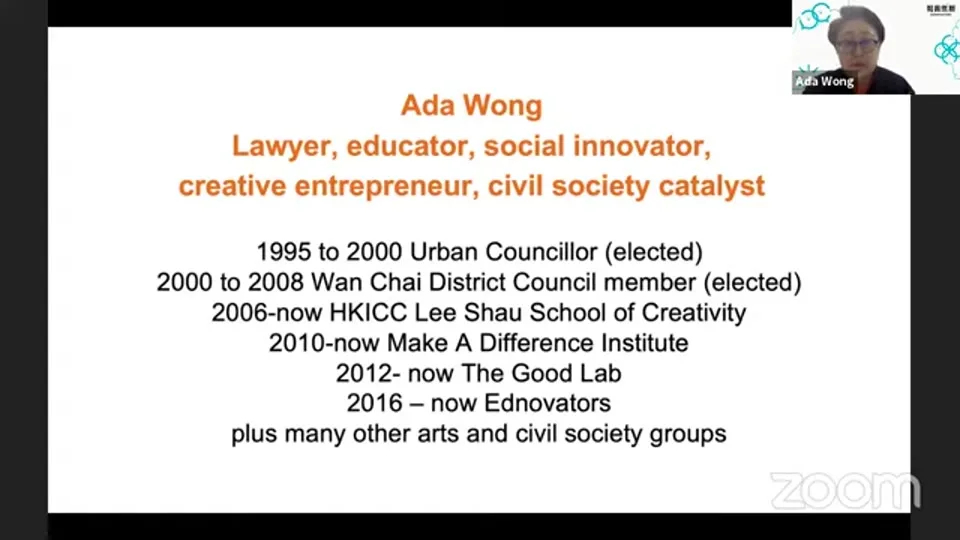
Wongは聴衆に対し、自身がそれまでの20年から25年の間に何を生み出してきたかだけでなく、なぜ、どのようにそれを行ってきたのかについても考えるよう求めた。彼女は自らを、弁護士、教育者、社会イノベーター、クリエイティブ・アントレプレナー、そして何よりも、多様なエコシステムへと成長しうる取り組みを立ち上げる「市民社会の触媒」であると説明した。
市政局と区議会で選挙による公職を14年間務めた経験から、社会問題への対処や新たな視点の導入において、政府だけでは不十分であり、十分な応答性も備えていないことをWongは理解した。そこで彼女は、市民自身がどのように変化を生み出せるのかを問うた。そのような変化は個人から始まり、ボトムアップで進むべきであると彼女は述べた。
Wongは、自らが設立に携わった3つの組織、HKICC Lee Shau Kee School of Creativity、MaD、The Good Labを軸に講演を構成した。これらの組織は、彼女のキャリアにおける連続した段階ではなく、並行する複数の流れを表していた。彼女はこの組み合わせを、複数の職業を併せ持つことを指す場合がある「スラッシュ・キャリア」になぞらえ、自らを「年季の入ったスラッシャー」と呼んだ。(0:26:51–0:32:31)
創造性を中心に据えたオルタナティブ・スクール
Wongは、HKICC Lee Shau Kee School of Creativityを、生徒のニーズに人間主義的に応え、創造的才能を育むために設立された、後期中等教育段階のオルタナティブ・スクールとして紹介した。同校は借用した平屋建ての校舎で出発した後、2年目に新校舎へ移転した。カリキュラムは芸術、文化、デザインを中心とし、生徒が自分自身、世界、知識を発見できるよう支援することなどを目標として掲げている。
同校は想像力、イノベーション、思いやりを重視しており、Wongはこれらが人工知能の時代において特に重要であると考えていた。また、差異、包摂、自律性も重視している。生徒には、自ら学習のペースを定め、自身の教育に主体的な責任を持つための余地が与えられているが、外部の人々はこの自由を規律の不足と解釈することもある。
教師と生徒は比較的対等な環境で、ともに学び、多くの場合、輪になって座る。校内では、展覧会、舞台公演、バンド演奏、ファッションショー、年次ブックフェアのほか、生徒が考案した、コスプレと組み合わせた運動会も開催される。同校は、試験に不合格だったことへの処罰や退学処分を軸に学習を組織してはいない。その代わり、その理念には、人や物への配慮、個人および集団の権利と義務の尊重、差異に対する開放性が含まれている。
中国語、英語、数学に加え、生徒は音楽、視覚芸術、デザイン・テクノロジー、映画・映像、舞台芸術、空間研究にわたって、探究型学習と体験学習に取り組む。香港中學文憑ではなく、同校独自の創造芸術ディプロマを修了することもできる。地域社会での学習、芸術家や文化団体との協働、市民参加もプログラムの一部である。
Wongは、同校が15年間存続してきたにもかかわらず、香港では依然として唯一の同種の教育機関であると指摘した。彼女は、より多くの教育者がオルタナティブ・スクールや実験学校を設立すると期待していたため、この唯一性が成功を意味するのか疑問を抱くようになった。それでも、同校の存在は、教育を変えることが可能であると保護者に示したと彼女は述べた。2021年9月からは、受け入れ対象を12歳以上の生徒へ拡大する予定であった。(0:32:32–0:44:02)
学校と地域社会におけるMaDのプログラム
Wongによれば、MaDは当初、TED Talksに似た3日間の年次イベントを開催していた。1,500人が参加し、台湾からの参加者を含む若者たちと、世界各地のイノベーターや思想的リーダーとを結びつけた。2010年から2018年頃まで、このイベントは、自らを社会変革の潜在的な担い手とみなす若者たちによるアジアのネットワーク形成を後押しした。同様のイベントが増え、大規模な国際集会には依然として多額の費用がかかったことから、MaDは、より深いエコシステムの変化を生み出すことを意図した、より小規模な介入へと軸足を移した。
The Hong Kong Jockey Club Charities Trustと共同で開発されたMaD Schoolでは、小学生が場所と利用者を調査し、素材を用いて実験し、安価な材料やリサイクル素材から遊び場を構築する方法を学んだ。別のプログラム「賢者の木」(Sage Trees)では、樹木医、芸術家、作家、教師、食のジャーナリストが中等学校に招かれた。生徒たちは近隣の樹木を調査し、芸術作品を制作するとともに、自分たちの地域のオンライン樹木マップを作成した。
地域の料理本を作るプロジェクトでは、生徒たちに両親や祖父母への聞き取りを行い、食を通じて家族の歴史を記録するよう求めた。一方、MaD Incubatorは、中等学校のチームを対象に、6か月間のワークショップ、地域観察、メンタリング、プロジェクト開発の機会を提供した。各チームには、飲料缶のリサイクルや、料理宅配で使用されるプラスチック容器の削減など、地域社会の問題への対応策を試すため、約HK$8,000、すなわち約NT$30,000が支給された。そこで生まれたプロジェクトは、学校を基盤とするプログラムとともに一般公開の場で発表された。(0:44:03–0:53:20)
場所、政策、包摂をめぐる実験
パンデミックの最中、MaDは予定していた海外研修旅行を「遊びのための都市」(Cities for Play)に置き換え、香港各地の遊び場を示した地図を参加者に提供した。現地訪問、講演、芸術家との交流を通じて、参加者は、路地や放置された道路を地域社会のニーズに合わせてどのように転用できるかを再考するよう促された。Wongは、MaDの各取り組みには、教師、ソーシャルワーカー、事務職員などの参加者によるセクター横断的な協働が伴っていることを強調した。
MaDのSocial Labは、若い住民、政府部門、専門家、市民社会の関係者を政策実験に参加させた。「健康な街路」プロジェクトでは、子どもと教師が、学校の前を車両が危険な速度で通過すると訴えたことを受け、小学4年生がスクールゾーンの道路標識を再設計した。彼らが考案したカメの標識は、現実の道路で使用できる可能性を検討するため、香港政府の審議対象となっていた。
地域観光ラボは、COVID-19後の観光を再考するため、旅行業者や地域社会と協働した。参加者は、村の住民とその暮らしの場を尊重しながら、地域内の旅行が訪問者のニーズをどのように満たせるかを検討し、さまざまな地域社会で提案を試行した。
Jockey Club People’s Art Connectiveは、地域の公共空間と学校を活用して、文化的包摂を支援した。子どもたちは芸術制作を通じて、ハラール食品、ヴィーガン食品、タンパク質を含む食品について学び、陶芸のワークショップは、さまざまな国籍のシングルマザーが社会的ネットワークを広げ、子どもたちと創造的に活動する助けとなった。(0:53:21–1:01:47)
橋渡し役としてのThe Good Lab
WongはThe Good Labについて、かつてのコワーキングスペースから、市民社会と社会イノベーションのプラットフォームへと発展した組織であると説明した。同組織は、政府、企業、市民社会の仲介役を務めている。共感は、リーダーシップと社会問題への対処の出発点でなければならないと彼女は主張した。
あるプロジェクトでは、気候変動に対応する排水インフラの改良計画をめぐり、住民とDrainage Services Departmentを結びつけた。The Good Labは、意見を聴くための地域巡回、地域社会との関係構築、子どもたちとのデザイン・ワークショップを通じて住民の見解を集め、従来のトップダウン型協議を越えて技術者が地域社会と意思疎通を図ることを支援した。
同組織はまた、デザイン思考とイノベーションについて、行政職員や公共サービス提供者を対象とする研修も実施した。Wongによれば、その目的は、政府や企業よりはるかに小規模な市民社会が、各セクター間の意思疎通を促し、前例のない課題にともに立ち向かえるような、3セクターから成るエコシステムを拡大し、強化することであった。
最後に彼女は、持続可能で開かれた民主的なエコシステムは、社会的ニーズを認識し、意思疎通を通じて相違を縮めることのできる人々に支えられていると述べた。そのような人々は、分断ではなく、理解と寛容を促進すべきである。(1:01:48–1:09:08)
討論
楊はWongに対し、彼女の各取り組みが、より大きなエコシステムのなかでどのように結びついているのかを説明するよう求めた。Wongは香港について、権力を持つ政府と資本を持つ企業セクターが支配的であり、その傍らにきわめて小規模な市民社会が存在すると描写した。彼女の目的は、市民社会を両者と同じ規模にすることではなく、市民社会の成長と他の2つのセクターとの交差を促し、社会が有する知識、経験、願い、イノベーションが政策と意思決定に影響を及ぼせるようにすることであった。
彼女は、学校、教会、福祉センターを運営する大規模だが保守的な組織と位置づけた既存のNGOと、変革を生み出す組織とを区別した。彼女の対応は、代替案を提案し、それを行動に移す意欲のある人々を育てることであった。School of Creativityは、新たな教育機関を設立できることを実証した。Ednovatorsは、教師を変革の担い手として育成した。MaDは、若者が変革の担い手となることを可能にした。そしてThe Good Labは、若者が3セクター間の協働に参加できるよう準備した。それぞれの組織は独自の存在であったが、Wongによれば、「小さなものから大きなものまで」にわたる実験を通じて変化を触発したのである。(1:09:09–1:15:57)
原文を読む
Ada Wong spoke at the 2021 Taiwan International Education Summit, held online on 29–30 June 2021. Introduced by summit curator and session host Adler Yang, her “Eastern perspective” talk formed part of Section 4, “SOCIALpath: Tides and Ties of the Collectives,” on 30 June. Wong argued that social change requires a bottom-up ecosystem in which schools, young people and civil-society organisations develop the capacity to act, collaborate across sectors and influence public decisions.
Building an ecosystem from below
Wong asked the audience to consider not only what she had created during the preceding 20 to 25 years, but why and how she had done so. She described herself as a lawyer, educator, social innovator, creative entrepreneur and, principally, a “civil society catalyst” who starts initiatives that may grow into a diverse ecosystem.
Her 14 years in elected office, on the Urban Council and District Council, had shown her that government alone was neither sufficient nor responsive enough to address social issues or introduce new perspectives. She consequently asked how citizens could create change themselves. Such change, she said, should begin with individuals and proceed from the bottom up.
Wong organised the talk around three institutions she had helped build: the HKICC Lee Shau Kee School of Creativity, MaD and The Good Lab. These organisations represented parallel strands of her career rather than successive stages. She compared this combination to the multiple occupations sometimes described as a “slash” career, calling herself “an old slash.” (0:26:51–0:32:31)
An alternative school centred on creativity
Wong presented the HKICC Lee Shau Kee School of Creativity as an alternative senior secondary school founded to provide a humanistic response to students’ needs and nurture creative talent. After beginning in a borrowed one-storey campus, it moved into a new building in its second year. Its curriculum centres on art, culture and design, while its stated aims include helping students discover themselves, the world and knowledge.
The school values imagination, innovation and compassion, which Wong considered particularly important in the age of artificial intelligence. It also emphasises difference, inclusion and autonomy. Students receive space to set their own learning pace and take ownership of their education, although outsiders may interpret this freedom as insufficient discipline.
Teachers and students learn together in relatively equal settings, often sitting in circles. The campus hosts exhibitions, performances, band and fashion shows, an annual book fair and a sports day combined with cosplay, an event devised by students. The school does not organise learning around punishment or expulsion for examination failure. Its principles instead include care for people and things, respect for individual and collective rights and obligations, and openness towards differences.
Alongside Chinese, English and mathematics, students undertake inquiry-based and experiential learning across music, visual arts, design technology, film and video, performing arts and spatial studies. They can complete the school’s own diploma in creative arts rather than the Hong Kong Diploma of Secondary Education. Community learning, collaboration with artists and cultural groups, and civic participation are also part of the programme.
Wong noted that the school had existed for 15 years but remained the only institution of its kind in Hong Kong. This led her to question whether its uniqueness represented success, since she had expected more educators to establish alternative or experimental schools. Nevertheless, she said its presence had shown parents that educational change was possible. From September 2021, it would extend its provision to students from the age of 12. (0:32:32–0:44:02)
MaD programmes in schools and communities
Wong said MaD initially organised a three-day annual event resembling TED Talks. Attended by 1,500 people, it brought international innovators and thought leaders together with young people, including participants from Taiwan. Between 2010 and about 2018, it helped form an Asian network of young people who regarded themselves as potential leaders of social change. As similar events proliferated and large international gatherings remained costly, MaD shifted towards smaller interventions intended to produce deeper ecosystem change.
Through MaD School, developed with The Hong Kong Jockey Club Charities Trust, primary-school students learned to study sites and users, experiment with materials and construct play spaces from inexpensive and recycled materials. Another programme, “Sage Trees,” brought arborists, artists, writers, teachers and a food journalist into a secondary school. Students researched nearby trees, produced artworks and created an online tree map of their neighbourhood.
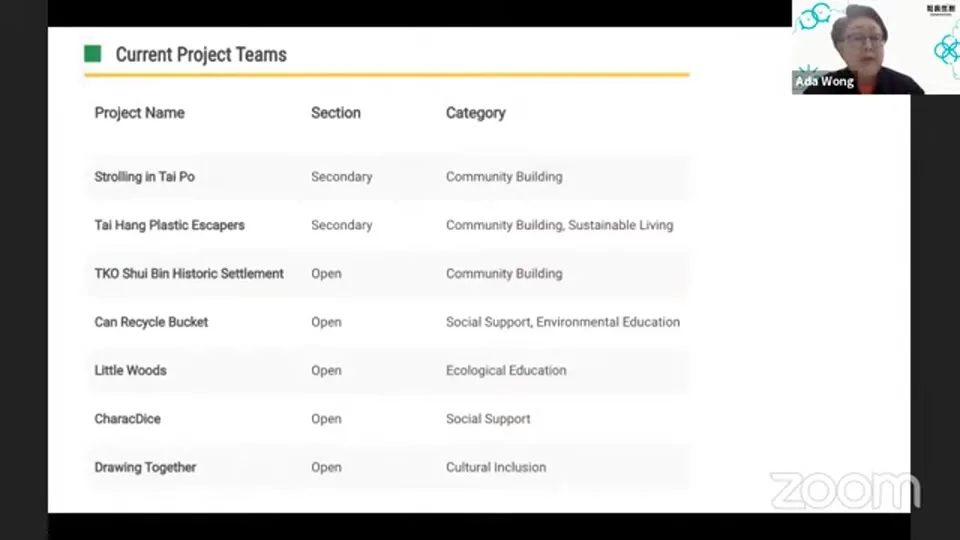
A community cookbook project asked students to interview parents and grandparents and record their families’ histories through food. MaD Incubator, meanwhile, offered secondary-school teams six months of workshops, neighbourhood observation, mentoring and project development. Each team received about HK$8,000—approximately NT$30,000—to test responses to community problems, including recycling drink cans and reducing plastic food-delivery containers. The resulting projects were presented publicly alongside the school-based programmes. (0:44:03–0:53:20)
Experiments in place, policy and inclusion
During the pandemic, MaD replaced an intended overseas learning trip with “Cities for Play,” giving participants a map of play spaces across Hong Kong. Visits, talks and meetings with artists encouraged them to reconsider how alleyways and neglected roads could be adapted to community needs. Wong stressed that each MaD initiative involved cross-sector collaboration among such participants as teachers, social workers and clerks.
MaD’s Social Lab joined young residents, government departments, professionals and civil-society figures in policy experiments. In a “healthy street” project, fourth-grade students redesigned road signs for school zones after children and teachers described vehicles passing schools at dangerous speeds. Their turtle sign was being considered by the Hong Kong government for possible real-world use.
A local tourism lab worked with tour operators and communities to reconsider tourism after COVID-19. Participants examined how local travel could meet visitors’ needs while respecting villagers and their homes, and tested proposals in different communities.
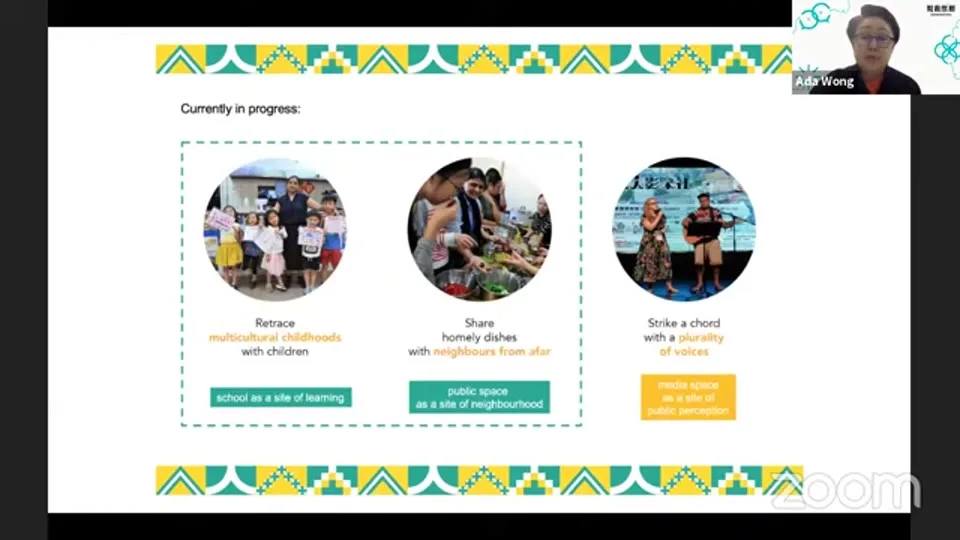
The Jockey Club People’s Art Connective used neighbourhood public spaces and schools to support cultural inclusion. Children learned about halal, vegan and protein foods through art-making, while pottery workshops helped single mothers of different nationalities expand their social networks and work creatively with their children. (0:53:21–1:01:47)
The Good Lab as a bridge
Wong described The Good Lab as a former co-working space that had become a civil-society and social-innovation platform. It acts as an intermediary among government, business and civil society. Empathy, she argued, must be a starting point for leadership and for addressing social problems.
One project connected residents with the Drainage Services Department during plans to upgrade drainage infrastructure in response to climate change. Through listening tours, community engagement and design workshops with children, The Good Lab gathered residents’ views and helped engineers communicate with the community beyond conventional top-down consultation.
The organisation also trained public officials and public-service providers in design thinking and innovation. Wong said the aim was to enlarge and strengthen a tri-sector ecosystem in which civil society, although much smaller than government and business, could help the sectors communicate and face unprecedented challenges.
She concluded that a sustainable, open and democratic ecosystem depends on people who recognise social needs and can narrow differences through communication. Such people should promote understanding and tolerance rather than division. (1:01:48–1:09:08)
Discussion
Adler Yang asked Wong to explain how her initiatives fitted together within a larger ecosystem. Wong depicted Hong Kong as dominated by a government possessing power and a business sector possessing capital, alongside a very small civil society. Her objective was not to make civil society equally large, but to help it grow and intersect with the other two sectors so that social knowledge, experiences, wishes and innovations could affect policy and decision-making.
She distinguished established NGOs, which she characterised as large but conservative providers of schools, churches and welfare centres, from change-making organisations. Her response was to cultivate people willing to propose alternatives and act on them. The School of Creativity demonstrated that a new educational institution could be built; Ednovators developed teachers as change-makers; MaD enabled young people to become change-makers; and The Good Lab prepared young people for tri-sector collaboration. Although each institution was unique, Wong said they catalysed change through experiments ranging “from small to big.” (1:09:09–1:15:57)
つながり
中央がこのページです。サイトの記録に基づいて、このページとつながりのあるページや人を、それぞれ印で示しています。二つの印を結ぶ線は、それぞれの印が示すページや人の間にもつながりがあることを表します。